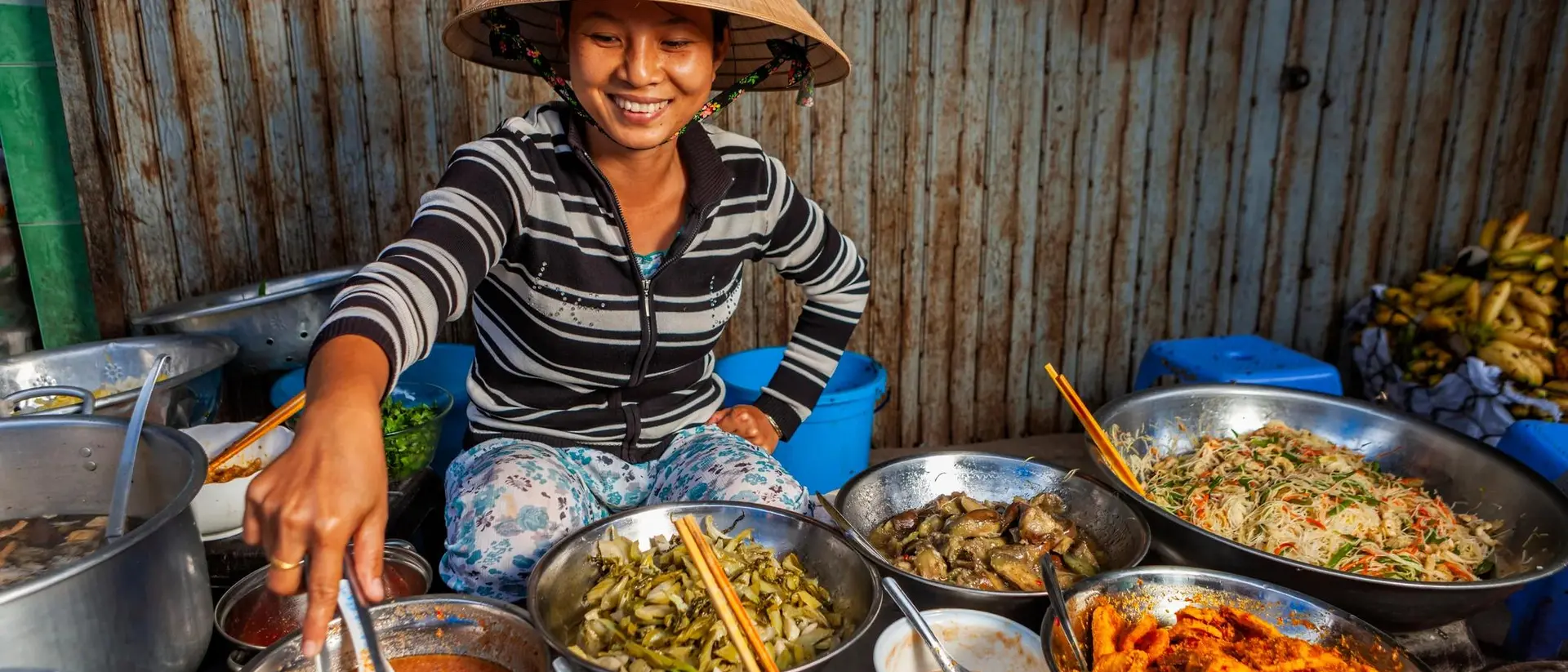
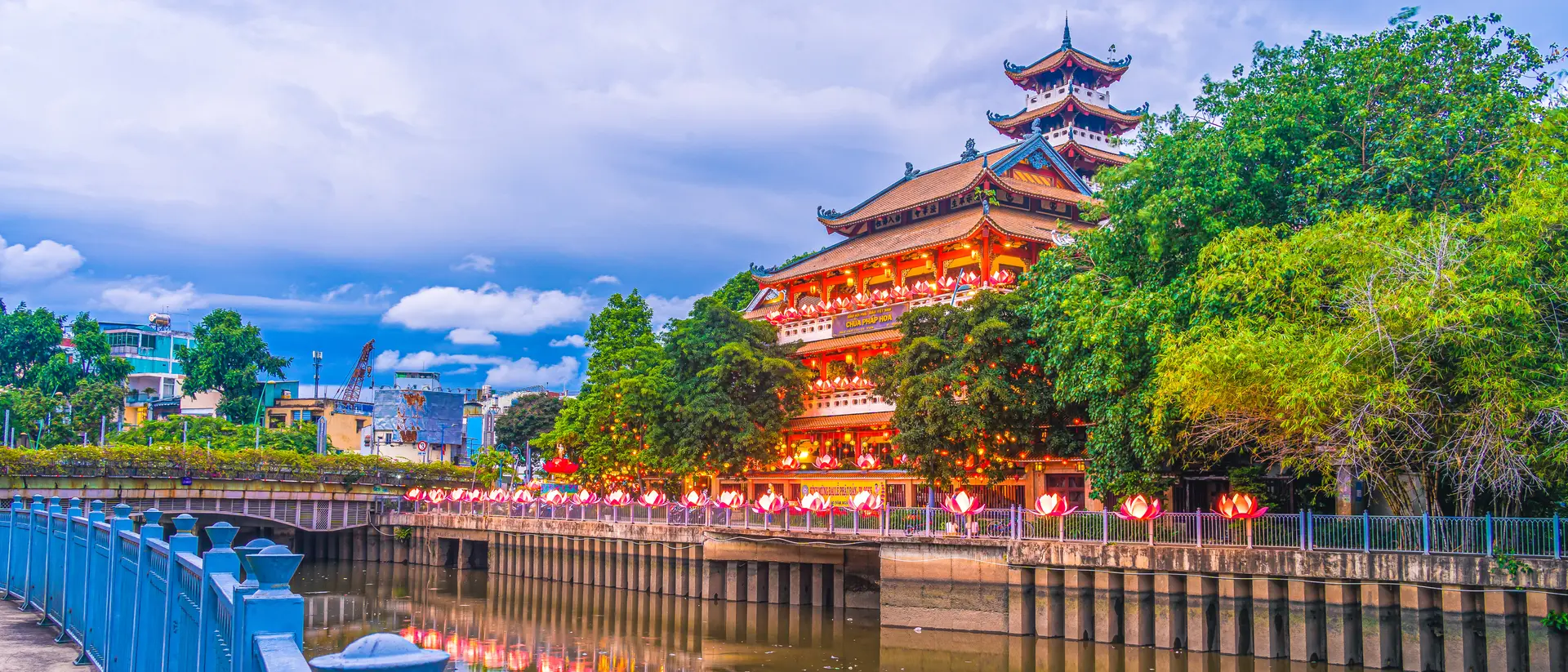
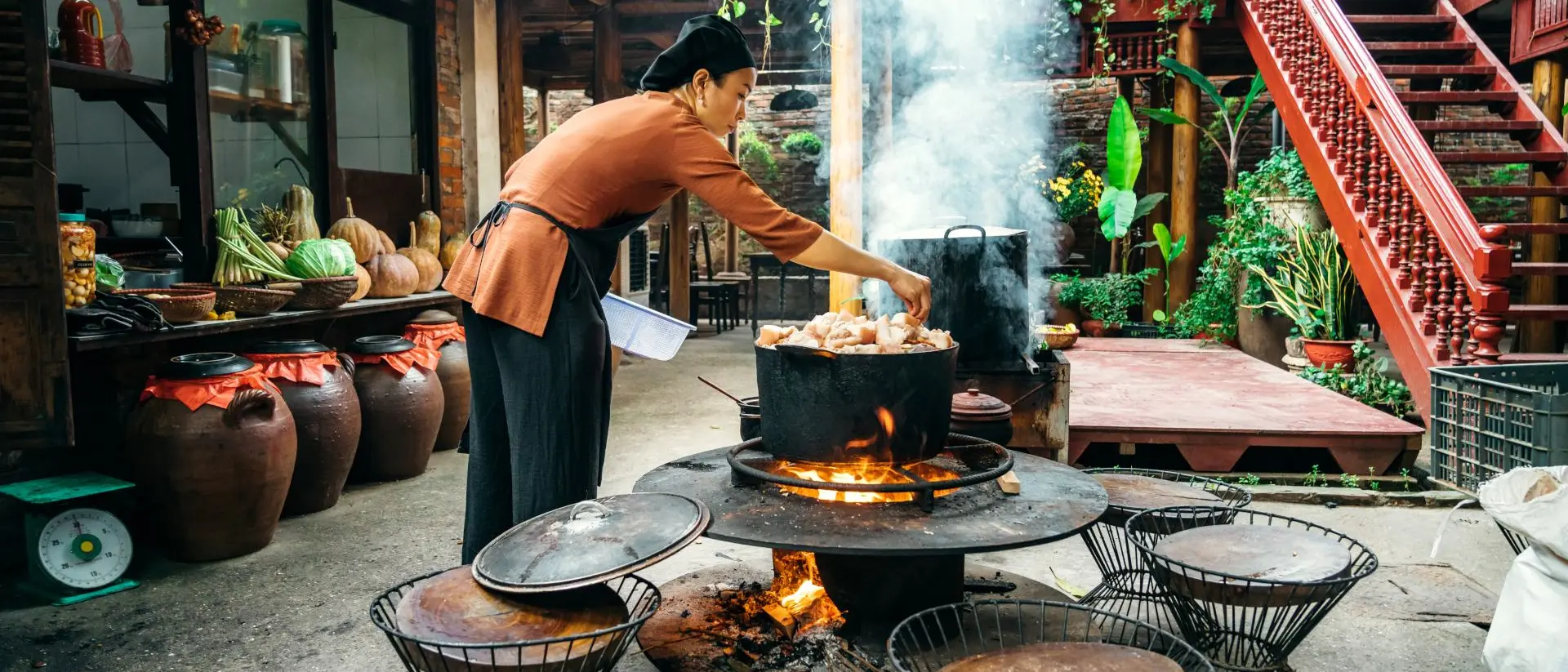

The most famous Vietnamese dish is pho, an aromatic noodle soup with herbs, beef or chicken in a flavourful broth. Other iconic dishes include banh mi, fresh spring rolls, and bun cha.
Vietnam Travel Information
Not sure which theme is right for you?
Food & Drink
Vietnamese cuisine isn’t just meals. It’s also a cultural experience, with every bite telling a story of geography, history, and community. From the sizzling sounds of street-side woks in Hanoi to elegant riverside dining in Hoi An, food is at the heart of Vietnamese life.
“Vietnamese cuisine is central to its culture: fresh, flavourful, and full of regional variety,” Destination Specialist Leo Liu says. “It’s one of the best ways to understand the soul of the country.”
Whether you’re perched on a tiny stool slurping a fragrant bowl of pho or savouring a multi-course tasting menu at a luxury resort, expect dishes built on contrasts: salty and sweet, crunchy and soft, vibrant and comforting.
To start planning your own Vietnamese culinary adventure, speak to one of our Destination Specialists today.
A Culinary Overview of Vietnam
Vietnam’s cuisine is as diverse as its landscapes, shaped by three distinct regions: the North (where subtle flavours dominate and signature dishes include steaming bowls of pho garnished with fresh herbs), Central Vietnam (where the food is bold, spicy, and colourful and dishes like bun bo Hue pack a punch), and the South (home to sweeter notes and abundant tropical ingredients, from fresh seafood to coconut-based curries).
The common threads? Rice is everywhere, from noodles and paper-thin wrappers to fragrant steamed grains. Fresh herbs like basil, cilantro, and mint elevate nearly every dish, and fish sauce (nuoc mam) is the backbone of flavour.
French influences linger, too. A bite of banh mi, with its crisp baguette and local fillings, is the perfect East-meets-West snack. Pair it with ca phe sua da (Vietnamese iced coffee) and you’ve got the ultimate local combo.
“Try ca phe sua da,” Destination Specialist Leo Liu advises, “for a taste of local life. It’s strong, sweet, and best enjoyed on a busy street corner in Hanoi.”
Unique Vietnamese Dining Experiences
In Vietnam, where and how you eat matters as much as what’s on the plate. Start with the blue plastic stools of Hanoi’s Old Quarter, where locals gather for bowls of pho at sunrise. These humble settings offer some of the most authentic flavors you’ll ever taste.
Head south for a vespa street food tour in Ho Chi Minh City. Take a thrilling ride weaving through neon-lit alleys, stopping for sizzling skewers, rice cakes, and shellfish grilled to perfection.
On the coast, savour freshly caught seafood in Danang or Nha Trang, best paired with a sea breeze and an ice-cold Saigon beer.
For something elevated, book a luxury cruise on Halong Bay with curated Vietnamese tasting menus or dine at historic venues like the Sofitel Metropole in Hanoi for a refined culinary journey.
“One of the best ways to explore Vietnam’s food scene,” says Destination Specialist Steve Hope, “is by vespa tour. Riding on the back while weaving through traffic is an adventure in itself.”
For more practical advice on dining etiquette and what to expect, check out our Vietnamese travel tips and etiquette guide.
Vietnam’s Beverage Scene
Vietnam may not be the first place you think of for wine, but its emerging vineyards are creating a buzz.
The Dalat region, with its cool highland climate, is home to boutique wineries producing varieties like Vang Dalat, Vang Ninh Thuan, and experimental blends that pair perfectly with local cuisine. Visiting a vineyard here is a unique way to see the agricultural side of Vietnam and sample wines that rarely leave the country.
Beer, however, is king in Vietnam. Pull up a low stool at a bia hoi corner in Hanoi and sip freshly brewed draft beer for a few cents a glass. Also try local favourites such as Saigon Special or 333, which pair beautifully with street food.
For something stronger, sample some ruou can, a traditional rice wine often shared communally through bamboo straws during festivals, or explore craft cocktail bars in Ho Chi Minh City for a modern twist on Vietnamese flavours.
“Vietnamese hospitality, says Destination Specialist Steve Hope, “often starts with a drink, whether it’s a cold beer on a Hanoi street or rice wine shared with a hill tribe family.”
Dining Etiquette in Vietnam
Dining in Vietnam is almost always family-style, with a spread of dishes placed in the centre of a table for everyone to share. Expect rice or noodles to be the base, surrounded by colourful plates of vegetables, meat, and dipping sauces. In rural homes, meals often happen on the floor, while city dining can range from bustling markets to refined restaurants.
Casual dining is the norm. Don’t be surprised if your “table” is a plastic stool by a street vendor, which is part of the charm. Tipping isn’t mandatory, but rounding up the bill or leaving small change for excellent service can be appreciated.
When eating in traditional settings, use your right hand, avoid sticking chopsticks upright in rice (it’s a funeral symbol), and wait for the eldest person to begin before you dig in.
For more tips on etiquette in Vietnam, visit our guide to Vietnamese cultural traditions.
Accommodating Dietary Needs in Vietnam
Vietnamese cuisine is remarkably adaptable, making it a dream for travellers with dietary needs. Vegetarian and vegan options are plentiful thanks to Buddhist traditions. Look for dishes labeled “chay” at markets and restaurants. Staples such as fresh spring rolls, tofu stir-fries, and noodle soups are naturally plant-based and bursting with flavor.
“Even in small towns, vegetarian options abound,” says Destination Specialist Leo Liu. “It’s a country where freshness and simplicity make every meal accessible.”
Gluten-free travelers will also find rice-based dishes everywhere, from steaming bowls of pho to banh cuon (rice noodle rolls). If you’re avoiding meat entirely, coastal regions and urban centres offer creative plant-forward menus at boutique cafés and upscale restaurants.
During Buddhist fasting periods, entire towns shift toward vegetarian dining, creating a wealth of choices for mindful eaters. Just remember to communicate your preferences. English is widely spoken in tourist areas, but having a note in Vietnamese for allergies or strict diets can be helpful.
Plan Your Vietnam Culinary Adventure
Vietnam’s culinary scene is a journey in itself, a flavourful mosaic of street eats, home-style dishes, and refined dining experiences. For the ultimate immersion, start with a market-to-table tour, where you’ll shop for fresh herbs, spices, and produce before joining a local chef to prepare traditional recipes like pho, banh xeo, or fresh spring rolls.
Spice things up with a street food vespa tour in Hanoi or Ho Chi Minh City by zipping through bustling neighbourhoods to taste everything from sizzling bánh mì to smoky grilled pork skewers.
For a more intimate experience, book a private chef dinner in a luxury villa or enjoy a curated wine-pairing menu at a boutique resort in Danang or Phu Quoc.
And don’t miss the chance to visit a coffee farm in the Central Highlands or savour a sunset cocktail on a Halong Bay cruise. Each meal tells a story of history, geography, and the people who make it unforgettable.
Start planning your custom Vietnam food and wine journey with Goway today.
Featured Vietnam Trip Ideas
Vietnam Travel PackagesClassic Vietnam: Hanoi, Halong Bay & Ho Chi Minh
Ho Chi Minh City, Hoi An, Hue, Ha Long Bay, and HanoiExplore the magic of Vietnam on a journey from the streets of Hanoi to the tranquil waters of Halong Bay, before diving into the rich history of Ho Chi Minh City.
12 days
From US$3,006/p.p.
Request a Quote
Classic Vietnam: Hanoi, Halong Bay & Ho Chi Minh
Ho Chi Minh City, Hoi An, Hue, Ha Long Bay, and HanoiExplore the magic of Vietnam on a journey from the streets of Hanoi to the tranquil waters of Halong Bay, before diving into the rich history of Ho Chi Minh City.
12 days
From US$3,006/p.p.
Request a Quote
Travel Stories
Get inspired about Your Trip to Vietnam
K-Beauty at the Source: Why Your Wellness Routine Leads to South Korea
South Korea's beauty industry has almost certainly reached your home already. According to Korea's Ministry of Food and Drug Safety, the country expor...
Hitting the Streets on a Pedicab Tour of Seoul
South Korea has earned a unique spot among Asian destinations for its food, history, traditions, and, more recently, its pop culture. Over the last se...
Exploring Rugged & Beautiful Mongolia
“Hold the dogs,” shouts the local guide as we approach a nomad’s home in the Gobi Desert somewhere in the middle of Central Mongolia. It’s a Mongolian...
Frequently Asked Questions
What are some of Vietnam’s most famous foods?
What is the traditional drink of Vietnam?
Vietnamese iced coffee (ca phe sua da) is a must-try, but traditional rice wine (ruou) is also deeply rooted in local culture, often shared during celebrations.
What do the Vietnamese drink at breakfast time?
Most locals start the day with strong coffee, either black or with sweetened condensed milk. Tea is also common, and it’s often served free in small cups at eateries.
What is the most popular street food in Vietnam?
Banh mi—Vietnam’s take on the French baguette sandwich—is the ultimate street snack. Pho, grilled skewers, and crispy pancakes (banh xeo) are also street-food staples.
What is a typical meal like in Vietnam?
Meals are usually shared family-style, with rice or noodles as a base, accompanied by vegetables, meat or seafood, and dipping sauces like fish sauce (nuoc mam).
Is Vietnamese food spicy?
Generally, Vietnamese food is milder than Thai cuisine, focusing on fresh herbs and balance rather than heat. Chili is often served on the side, so you can spice it up to taste.
What do Vietnamese people usually eat?
Rice is the cornerstone of the Vietnamese diet, served with vegetables, herbs, fish, and meat. Noodle soups, fresh rolls, and seasonal fruits are also common in daily meals.
Vietnam Travel Information
Not sure which theme is right for you?
Unlock more by subscribing to our newsletter.
With our newsletter, you’ll get access to regular communications that inspire you and help you explore the world your way.Exclusive Savings
Insider Benefits
Trending Stories
ExcellentBased on 5,300 ReviewsJacqueline Fagioli from Goaway Travel is excellent and very helpful and supportive. VenessaOur travel agent, Melissa Moses, created the perfect itinerary for our recent holiday to Portugal. Melissa had also planned our previous trip to England/Scotland. We have a great deal of confidence in her ability as she really listens to what we are looking for and she caters the plans according to our comfort levels and interests. customerJacqueline F. made our trip exceptional. Everything she planned or reserved worked out as it was supposed to. Croatia was amazing and I feel we were able to explore a lot of it because of Jacqueline.AllenThis was the first time we had utilized Goway. We wanted a custom itinerary for a 3 week Italy, Athens and Greek Island adventure. Edwina Brislane was receptive to our goals for the trip, had helpful suggestions and reacted well to our requested revisions. Lisa Dachuk helped "tie a ribbon" on the trip and ensured we had considered all aspects of the experience. Lisa dealt quickly with a couple of requests while on the trip and celebrated a successful trip with us.
We enjoyed working with both Edwina and Lisa. Their knowledge and enthusiasm contributed to our very memorable trip.Dan & GailI had a great experience booking Australia and New Zealand trip through Goway Travel. Lori Mezzoro was very helpful and organized. All the recommendations she made were very good. I had a great trip with my kids.LauraI recently traveled to Greece with friends, and our entire experience was exceptional thanks to the planning support we received from Avery at GoWay. Every part of our itinerary was organized with care, accuracy, and great attention to detail.
Our accommodations — Hera Hotel Athens and Sofitel Athens Airport — were comfortable, well‑located, and exactly what we needed. All airfares from Calgary and the multiple transfers (airport to city centre, city centre to Piraeus Port, and back again) were perfectly coordinated and made the trip completely stress‑free.
The 7‑night Idyllic Aegean Cruise was a major highlight. It was beautifully arranged and gave us an unforgettable way to explore the islands. Our excursions were equally impressive:
Skip‑the‑Line Acropolis & Acropolis Museum timed entry, which made sightseeing smooth and efficient
Classical Greece: Olympia, Delphi & Meteora, a breathtaking and well‑paced journey through some of Greece’s most iconic historical sites
Avery was consistently responsive, knowledgeable, and proactive throughout the planning process. Every confirmation, transfer, and timing detail was handled flawlessly, allowing us to simply enjoy the trip without worrying about logistics.
I highly recommend GoWay Travel — and especially Avery — for anyone planning a trip to Greece. This was one of the best travel experiences I’ve had, thanks to their outstanding service and organization.LorraineMy husband and I just returned from a wonderful 2 week trip to Chile, South America arranged for us by Goway Travel. Every detail of the trip was outstanding. The hotel choices were perfect for us as were the tours Goway arranged. All the guides were prompt, friendly and very knowledgeable. Our Destination Specialist, Karen Larrota, did an fantastic job setting up the itinerary. Communication with her during the booking process was excellent. The Goway customer service team reached out to us several times during the trip (as did Karen) which was very reassuring.
We have traveled with Goway previously and will surely do so again. Regina ChaplesAn Extraordinary Tour Guide in Xi’an China Leo a blessing we will never forget
There are some people who come into your life and leave footprints on your heart that will last forever, Leo was one of those people for us.
My husband, Keith, and I dreamed of visiting China for more than 30 years and Leo helped make that dream an unforgettable blessing. He was more than a tour guide. He was a wonderful teacher, a caring soul, and a blessing from God.
His knowledge of Chinese history and culture was remarkable from the terra-cotta warriors to the ANCIENT city wall, the Monastery, and the local art gallery, Leo brought every experience to life. He taught us so much and helped us appreciate the beauty and history of China in ways we will never forget.
What touched me most was his compassion for my husband Keith, knowing Keith had difficult breathing and walking long distance and walking Leo thoughtfully arranged a wheelchair so he could enjoy the journey with everyone that kindness meant more to me than words can express
Leo patience, professionalism kindness and genuine care for our group. May every moment special. He make sure we were comfortable learned something new and enjoyed authentic Chinese food and created memories we will cherish for a lifetime
I truly believe God placed special people in our lives for a reason, and Leo was certainly one of those blessings for our group. We are forever grateful for the knowledge, laughter, compassion, and beautiful memorial. He gave us
I recommend Leo wholeheartedly, to anyone visiting Xi’an China. You will leave with more than photograph you will leave, with knowledge appreciation, and memories that stay in your heart forever
Leo may God continue to bless you, protect you, and guide you as you touch the lives of travelers from around the world. Thank you for being such a beautiful part of our China story. You will never be forgotten
With love and gratitude
Lisa & KeithLisa PaulMy wife and I have just returned from our 5th trip with Goway. Once again everything ran smoothly from first day to last. This trip was the 9 day all Ireland tour which covered both north & south Ireland. The tour was operated by Rabbies tours whom we used in Scotland and the 16 passenger van only had 6 passengers including us.Other than a couple of days the weather was prety good although the wind did get a bit wild. The pub food was delicious & i got a taste for real Guiness. We spent a few extra days in Dublin and found it very expensive, the excange rate didn't help. Our travel consultant Jaqueline personalised the trip and was very helpful. George CroomeWe were able to see the perfect amount of sites during our nearly 3 weeks in Australia. Sam Day was extremely knowledgable about every step of the travel process. He was incredibly patient with all the demand my wife and me had. We really look forward to using his services again.Alan Rosenberg
Verified
Verified
Verified
Verified
Verified
Verified
Verified
Verified
Verified
Verified