US and Canadian citizens can visit Israel visa-free for up to 90 days. Your passport must be valid for at least six months beyond your departure date. On arrival, you’ll receive an entry card instead of a passport stamp—keep it with you, as you may need it for hotel check-ins or when exiting. If you plan to travel onward to neighbouring countries, check entry requirements carefully, as border regulations can change.
Discover Tailor-Made Israel Vacations
A journey through sacred sites, desert wonders, and Mediterranean charm.
Israel blends ancient history with natural beauty, from Jerusalem’s spiritual landmarks to Tel Aviv’s vibrant coast. Wander Roman ruins, float in the Dead Sea, and uncover desert landscapes shaped by centuries of culture, faith, and tradition.
Featured Highlights
- Walk through Jerusalem’s Old City, layered with sacred history
- Float in the healing waters of the Dead Sea’s salt basin
- Discover Masada’s desert fortress and sweeping views
- Wander Roman ruins at Caesarea along the coast
- Experience Tel Aviv’s lively culture and Mediterranean beaches
- Explore Galilee’s rolling hills, vineyards, and historic villages
Featured Israel Trip Ideas
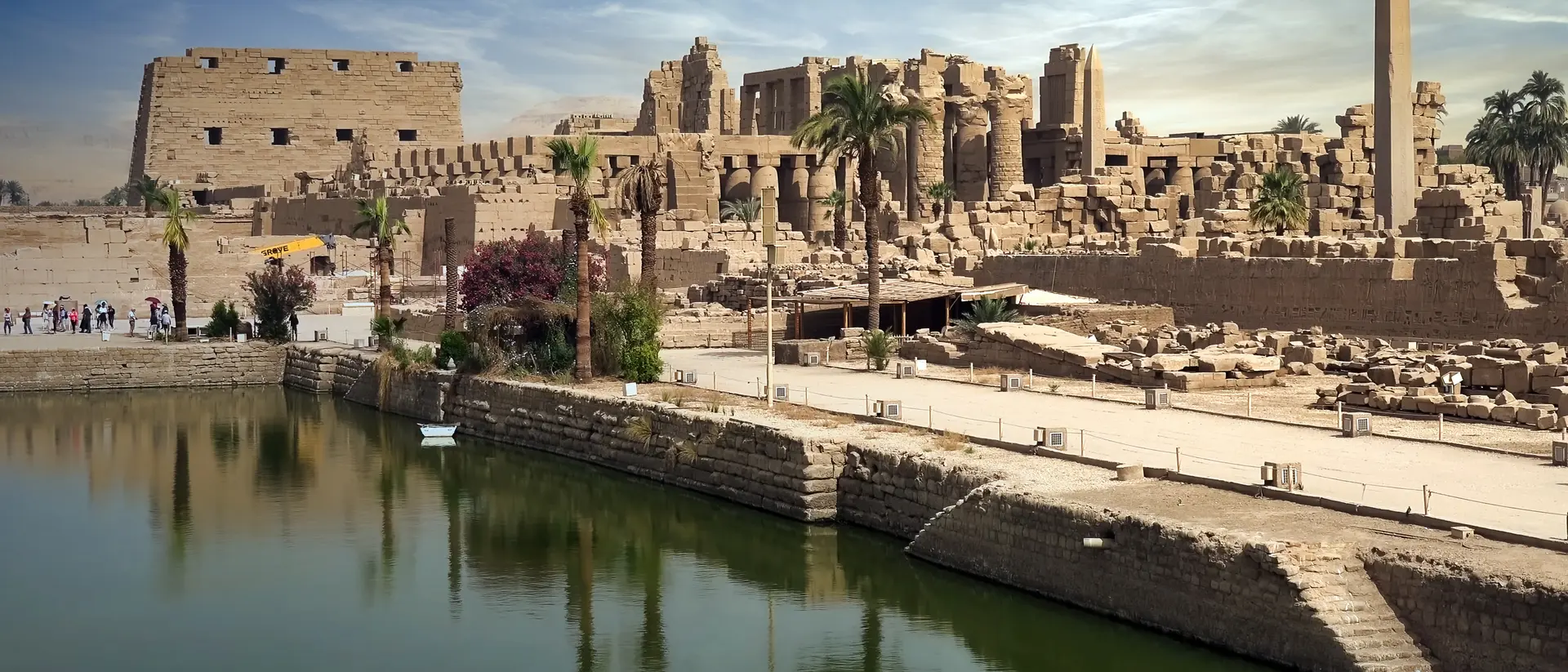
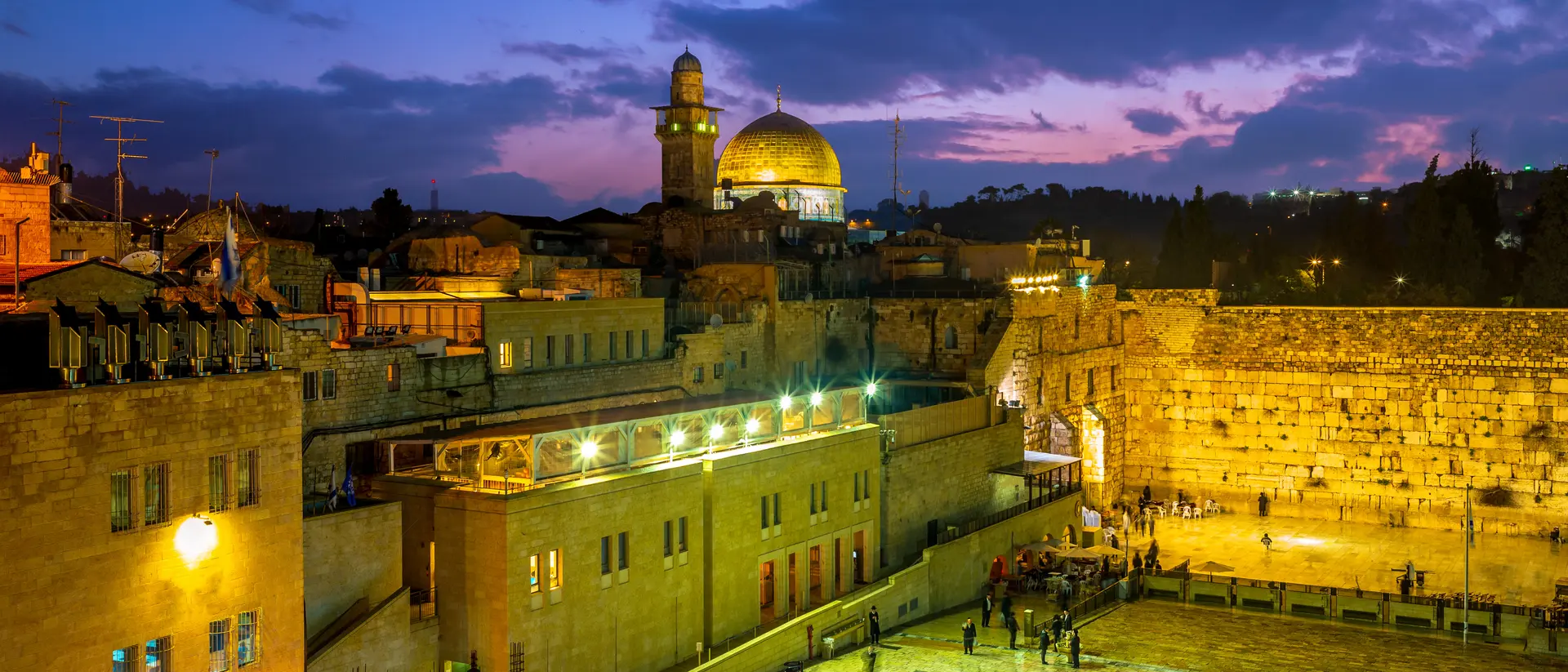
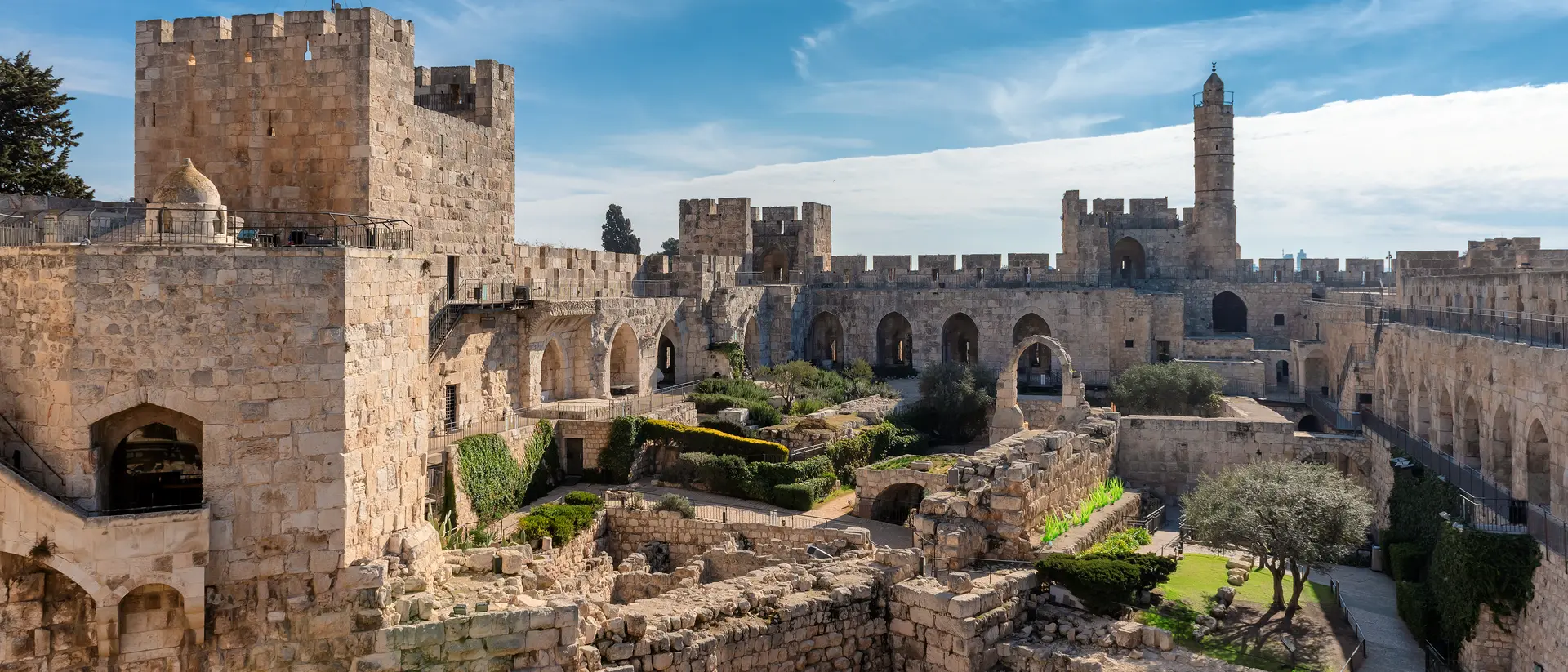
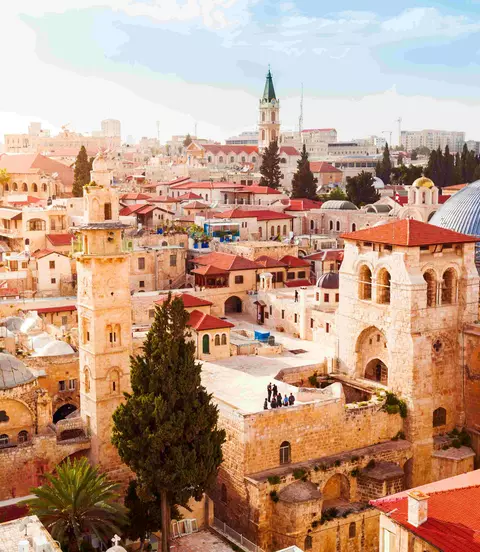
Exploring the crossroads of history, faith, and nature.Israel is a land where sacred traditions meet striking landscapes. Explore Jerusalem’s Old City, with its winding alleys leading to the Western Wall and the Church of the Holy Sepulchre. Follow in the footsteps of ancient traders at Caesarea and Akko, or wander Masada’s fortress above the stark Judean Desert. Drift effortlessly on the mineral-rich waters of the Dead Sea, then discover the Negev Desert’s raw beauty. Along the coast, Tel Aviv buzzes with culture, modern art, and Mediterranean flavours, while Galilee offers serene hills, vineyards, and historic towns. Israel promises an unforgettable blend of past and present, sacred and everyday.
Ancient Treasures of Israel, Egypt & Jordan
Cairo, Pyramids of Giza, Nile River, Luxor, Valley of the Kings, Wadi Rum, Petra, Dead Sea, Amman, Jerusalem, and Tel AvivJourney through the heart of the Middle East, where ancient history meets modern life. Marvel at the pyramids, cruise the Nile, and explore Petra's stunning cliffs.
22 days
From US$5,178/p.p.
Request a Quote
Ancient Treasures of Israel, Egypt & Jordan
Cairo, Pyramids of Giza, Nile River, Luxor, Valley of the Kings, Wadi Rum, Petra, Dead Sea, Amman, Jerusalem, and Tel AvivJourney through the heart of the Middle East, where ancient history meets modern life. Marvel at the pyramids, cruise the Nile, and explore Petra's stunning cliffs.
22 days
From US$5,178/p.p.
Request a Quote
What do Goway's travellers say?
“Bucket list trip Egypt Odyssey ”
My Wife and I finally had an opportunity to go on one of our Bucket list trips Goway Travel, Egypt Odyssey 9 days including the Nile river .The booking process was seamless,the Goway rep Harpreet answered all of questions, in a professional, and timely manner, the trip it self was incredible, the meet and greet at the airport was incredibly quick,the rep Mohammed Koda,had our luggage and visas in no time we were at the Sheraton Cairo, an amazing hotel in the heart of Cairo, a wonderful facility, 3 amazing restaurants ,a large pool, a bank, and a Starbucks .The Pyramids and Museum tour where incredible WOW, we still talk about it, the guide Marco was amazing, professional and personable gentleman an excellent combination. The shuttle to airport for the Nile river Luxor to Aswan was also very smooth, when arriving in Luxor another rep was waiting for us,we were quickly ,taken to the docks, the Sonesta boat was amazing ,the cabin was clean a good size, and the food very good, with excellent deserts and plenty of fresh fruits, pool with plenty of shade .Our daily trips to the tombs and sites were amazing, our guide Mr Honey is an incredible book of knowledge we are both very grateful for his skills and knowledge .The Nile river trip will stay in our minds for years, we returned back to Cairo to finish our Egypt Odyssey trip with a tour of the original Museum ,such incredible history, and an incredible trip ,thank you so much Goway Travel for making this dream trip happen for us
Tony and Rose Ferreira
sharkman Tony“Amazing trip to Egypt”
We thoroughly enjoyed our trip to Egypt. We were a small group trip with only three people. The guides and transfers from Emeco were excellent.Always on time and very knowledgeable. Our transfer went smoothly due to these guides. They were very efficient and made sure we didn’t have to wait in lines too long. The Sun Goddess was a beautiful riverboat and all of our meals were excellent. One suggestion is to include tips . We were always trying to find the right amounts for tips. Also the times for most excursions were very early in the morning….5:30 or 6:00 and that was not on our itinerary. I understand the early times to avoid the crowds. All in all we were very pleased with GoWay and would use them again in the future. Thinking of South Africa Safari.
Also would like to thank our agent Elise for answering all of my questions and concerns. We felt very safe in Egypt.
Sue Scarborough“Exceptional Customer Care from Goway Travel.”
I would like to recognize the outstanding support provided by the Goway Travel team, and especially Yael, during a very challenging situation involving my customers who were stranded in Dubai.
From the moment the issue arose, Yael and the team were incredibly supportive, working through multiple options to secure flights and ensure my customers could return home safely. Their persistence, professionalism, and willingness to explore every possible solution made a stressful situation much easier to manage.
Throughout the process, communication was clear, timely, and reassuring. It was evident that the team was fully committed to the well-being of the traveler and to resolving the situation as quickly as possible.
I truly appreciate the dedication shown by Yael and the Goway Travel team. Their actions reflect a strong commitment to customer care and partnership, and I’m very grateful for the support they provided in getting my customer home safely.
Thank you Goway.
Tamara Kincek from Expedia Cruises Chilliwack
Tamara“Turkey Adventure”
Farooq was an absolute delight to work with finding hotels in Turkey and pulling the 9-person itinerary together over a number of days!
Christine Gabreski“Dubai”
I used Goway travel for my group trip to Dubai. Taha was amazing from start to finish. She helped execute a fantastic trip for my friend’s 50th birthday celebration. From all the wonderful tours to the Mega Yacht cruise. I will be using Taha and Goway travel in the future.
Tracy Bush“The team in Turkey was reliable and…”
The team in Turkey was reliable and friendly. We had a wonderful vacation free of anxiety about pick ups etc. we felt very well cared for.
customer“Egypt Odyssey Birthday Tour”
The booked The Egypt Odyssey package for my 50th birthday and Goway did not disappoint. Destination Specialist Elise was very friendly and helpful in coordinating the tour, I had several questions and add-ons and she was very gracious throughout. Our Cairo on-site coordinator Adel was a gem, from greeting us at the airport to helping us through customs, everything was handled efficiently and seamlessly.
Our tour guides ever all very knowledgeable Egyptologists and made each tour unforgettable.
Adel was really as star and Remy our tour guide in Luxor was the best. I'd definitely travel with Goway again.
Dawn“All your staff were just amazing”
All your staff were just amazing. Brooke was very knowledgeable. Answered all my questions without hesitation. Adel did everything possible to get us to the hotel. He was really great guy to know in Egypt. Very helpful. Sahra was our first first guide. Just amazing lady. Rami was fantastic during our excursions. Very friendly and unbelievably smart. I found him a man who loved his job. And it showed when he took us around. The best rating for every one involved who did their job very well.
Marek Pierson“Egypt experience”
Group of 8 was terrific. All got along and we usually ate together,Tour guides very knowledgeable. Service of staff personnell always pleasant. Made for a good trip. Enjoyrd all the sites.
While warned in advance, tipping became excessive even if not forced. Early starts helped reduce impact of crowds - would have liked fewere ealy starts. Guides might benefit fromspeaking through a headset as crowds impacted ability to hear properly. Even a set of brief notes beforehand would be useful.
Robert Allen“Exceptional Service & Unforgettable…”
Exceptional Service & Unforgettable Experience – Highly Recommend!
My group’s upcoming journey to Egypt, including a breathtaking Nile cruise, has been nothing short of seamless thanks to Tanya Fuller at Goway Travel. From the very beginning, their team has been incredibly responsive, knowledgeable, and attentive to every detail, down to the last minute ensuring that our itinerary is perfectly curated for an unforgettable adventure.
Their expertise in organizing group travel truly shines—handling accommodations, excursions, and logistics with professionalism and efficiency has provided me with the confidence that this trip will be nothing short of extraordinary.
Looking forward to an incredible experience next year! And the year after that! And the year after that!!
Debbie VitalTravel Information about Israel
Get to know Israel before you go.
Best Time to Visit
Israel’s Mediterranean climate makes it a destination that can be enjoyed throughout the year. Sunshine dominates much of the calendar, with hot summers, cool rainy winters and transitional seasons that are especially appealing for those keen to explore both cities and landscapes in comfort.
The most pleasant times to visit are spring and autumn. In April and May, as well as October and November, temperatures are warm without being overbearing, creating ideal conditions for walking through Jerusalem’s Old City, relaxing on Tel Aviv’s beaches or hiking the Galilee hills. Summers, from June to August, bring intense heat, particularly along the coast and in the south, though Jerusalem’s evenings are often surprisingly comfortable. Between November and March, rain is common along the coast while higher elevations may even see snow, offering a very different perspective on the country’s scenery.
Cultural and religious festivals shape travel here just as much as the weather. Purim in March fills towns with street parties and parades, while Passover and Easter draw large numbers of visitors to historic and sacred sites. Yom Kippur is especially unique, when the entire country slows to a standstill, with empty roads and closed businesses creating an atmosphere unlike any other. These moments are memorable but also bring higher demand and prices.
For those wishing to combine favourable weather, manageable crowds and cultural depth, the shoulder months are particularly rewarding. Whether wandering Tel Aviv’s lively boulevards, exploring the desert’s dramatic landscapes or experiencing the layered history of Jerusalem, timing your visit carefully will help you experience the many sides of Israel.
Places To Go
Handcrafted journeys to our most popular places to visit in Israel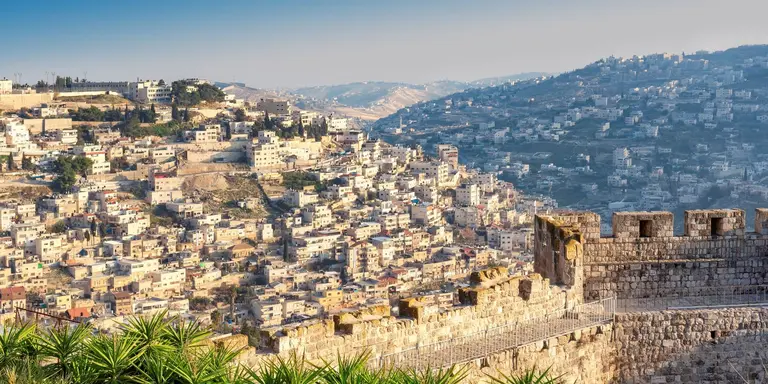
Jerusalem
Located in the Judaean Mountains between the Mediterranean Sea and the Dead Sea is Jerusalem, the...
Located in the Judaean Mountains between the Mediterranean Sea and the Dead Sea is Jerusalem, the largest city in Israel. Considered a holy city by three religions, Judaism, Christianity and Islam,...
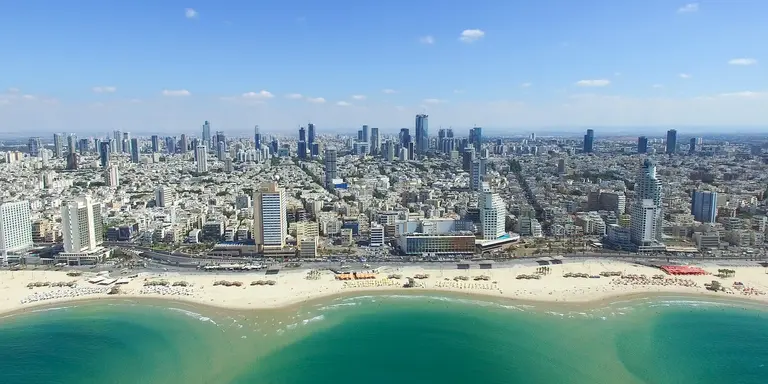
Tel Aviv
Located on the Israeli Mediterranean coastline in central-west Israel is Tel Aviv, the country’s...
Located on the Israeli Mediterranean coastline in central-west Israel is Tel Aviv, the country’s second most populous city. With the UN and many international communities refusing to acknowledge...
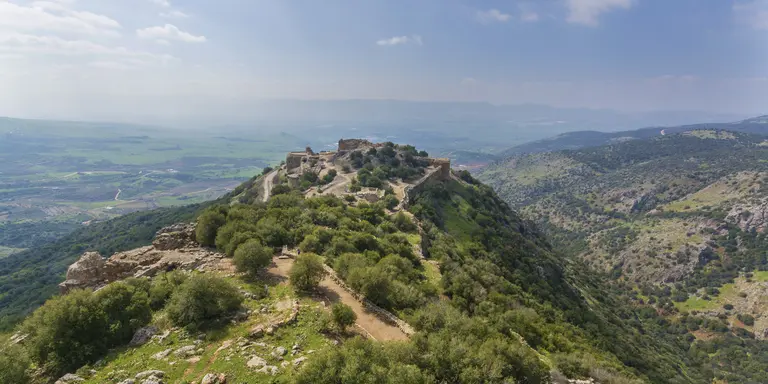
Golan Heights
The Golan Heights are Israel’s mountainous northern region. Although internationally recognized as...
The Golan Heights are Israel’s mountainous northern region. Although internationally recognized as Syrian territory, the Golan Heights have been administered by Israel since 1967 when the region was...
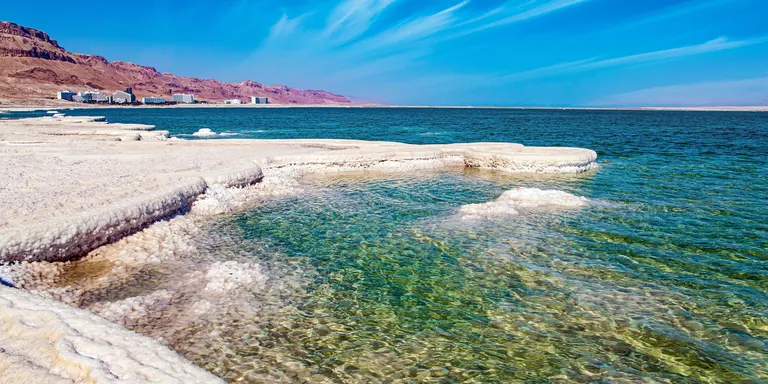
Dead Sea
The Dead Sea is a salt lake that borders Jordan to the east and Israel and the West Bank to the...
The Dead Sea is a salt lake that borders Jordan to the east and Israel and the West Bank to the west. The surface and shores of the Dead Sea are 423 m (1,237 ft) below sea level, making it Earth’s...
Jerusalem
Located in the Judaean Mountains between the Mediterranean Sea and the Dead Sea is Jerusalem, the...
Located in the Judaean Mountains between the Mediterranean Sea and the Dead Sea is Jerusalem, the largest city in Israel. Considered a holy city by three religions, Judaism, Christianity and Islam,...
Tel Aviv
Located on the Israeli Mediterranean coastline in central-west Israel is Tel Aviv, the country’s...
Located on the Israeli Mediterranean coastline in central-west Israel is Tel Aviv, the country’s second most populous city. With the UN and many international communities refusing to acknowledge...
Golan Heights
The Golan Heights are Israel’s mountainous northern region. Although internationally recognized as...
The Golan Heights are Israel’s mountainous northern region. Although internationally recognized as Syrian territory, the Golan Heights have been administered by Israel since 1967 when the region was...
Dead Sea
The Dead Sea is a salt lake that borders Jordan to the east and Israel and the West Bank to the...
The Dead Sea is a salt lake that borders Jordan to the east and Israel and the West Bank to the west. The surface and shores of the Dead Sea are 423 m (1,237 ft) below sea level, making it Earth’s...
Travel Styles
Explore Israel by Travel Type
Ways to Travel

Themes
Ways to Travel
Themes
Frequently Asked Questions
Do I need a visa or special permits to enter Israel?
What language is spoken locally? How widely is English understood in Israel?
Hebrew and Arabic are the official languages, but English is widely spoken, especially in cities, hotels, restaurants, and by tour guides. Most signs are bilingual or trilingual, so navigating is easy for English speakers. Learning a few Hebrew greetings, such as shalom (hello) and toda (thank you), is a nice touch.
What are the must-see attractions in Israel?
Jerusalem is the spiritual heart, home to the Western Wall, the Church of the Holy Sepulchre, and the Dome of the Rock. Tel Aviv contrasts with its modern skyline, beachside promenades, and lively markets. Float in the Dead Sea, explore the desert fortress of Masada, and wander the ancient port city of Acre (Akko). In the north, the Sea of Galilee and Golan Heights offer serene views and hiking trails. Eilat, on the Red Sea, is ideal for snorkelling and diving.
Is Israel safe? What should I keep in mind while travelling there?
Israel is generally safe and well-policed, though regional tensions can occasionally affect certain areas. Stay informed through local news and follow guidance from authorities or your tour operator. Security checks at public places are routine. Avoid entering Gaza or parts of the West Bank without proper guidance. Petty crime is rare, but as always, keep an eye on belongings in crowded markets or beaches.
What's the best way to travel within Israel?
Israel has a well-developed transport system. Trains and buses connect major cities efficiently, and taxis or rideshares are plentiful. Renting a car is ideal for exploring the Galilee or the Negev Desert. Note that public transport largely pauses from Friday afternoon to Saturday evening during Shabbat, though shared taxis (sherut) may still operate. Domestic flights are available between Tel Aviv and Eilat.
What Israeli cultural customs should I be aware of?
Israelis are direct but warm. Shaking hands is the common greeting, though among religious communities, men and women may avoid physical contact. Dress modestly at religious sites—covered shoulders and knees are respectful. Shabbat, from Friday sunset to Saturday sunset, is observed widely, so some businesses close. Tipping around 10–15% is customary in restaurants.
What should I wear/pack for Israel’s climate?
Israel’s climate varies from Mediterranean along the coast to desert in the south. Summers (May–September) are hot and dry—pack lightweight, breathable clothing, a hat, and sunscreen. Spring and autumn are mild and ideal for sightseeing. Winters (December–February) can be cool and rainy in the north and Jerusalem, so bring a light jacket. If visiting religious sites, pack modest clothing that covers shoulders and knees. Comfortable shoes are essential for walking on uneven, historic streets.
Don't see the perfect option? Request a custom quote.
Unlock more by subscribing to our newsletter.
With our newsletter, you’ll get access to regular communications that inspire you and help you explore the world your way.Exclusive Savings
Insider Benefits
Trending Stories