Overview
Take a trip to Pyeongchang on your South Korea Vacation
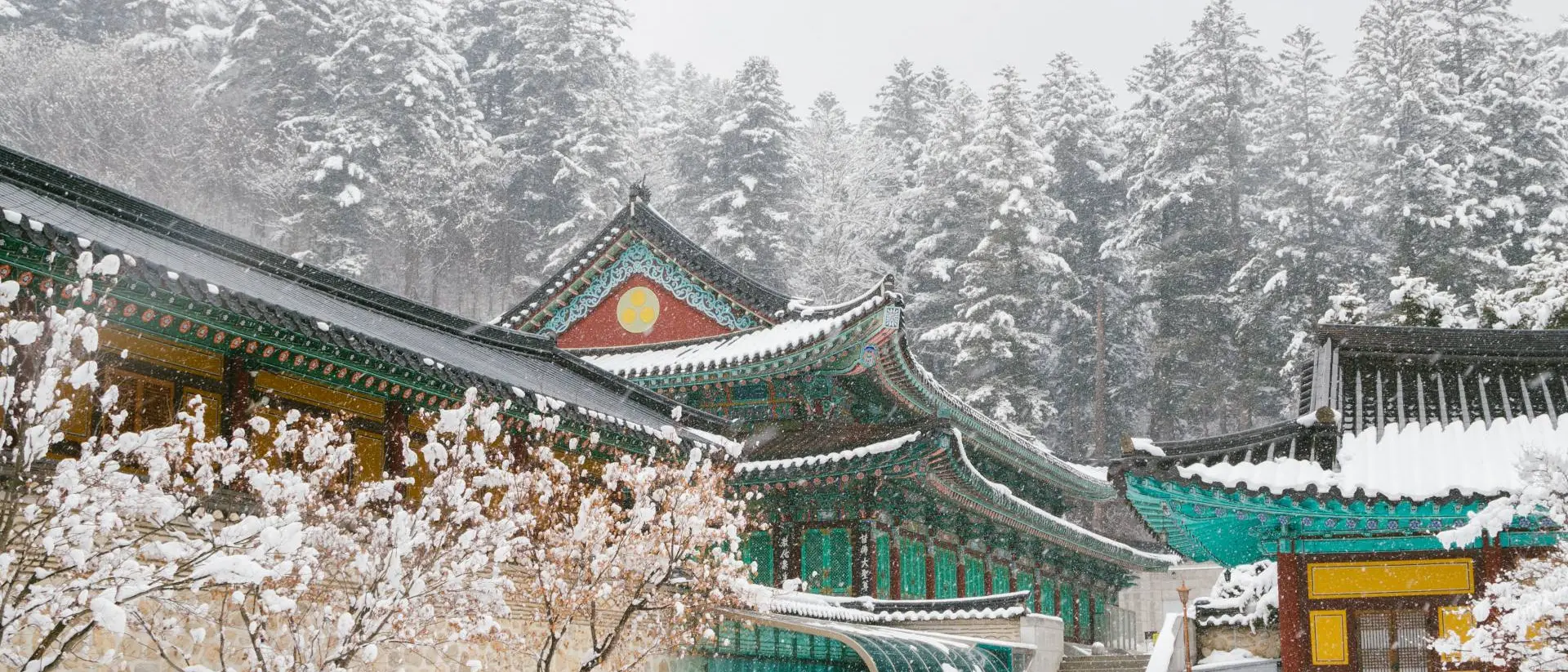
Located in South Korea’s northeast, Pyeongchang was instantly made famous for playing host to the 2018 Winter Olympics and Paralympics. As evident by the presence of the Olympics, the area is most popular in winter, when travellers flock to the two main ski resorts, Alpensia and Yongpyong, which are some of the best ski resorts in Asia. Alpensia was home to the main Olympic Village in February 2018, while the main township of Daegwallyeong-myeon housed the Olympic Stadium.
Historically, Pyeongchang has passed between the various claimant ruling families of Korean antiquity, including the Goguryeo Dynasty and the Silla Dynasty. You’ll find remnants of this historical heritage in the many temples throughout the mountain range. The most significant of these national heritage sites are Sangwansa Temple, founded in 705, and Woljeongsa Temple, founded in 643, both of which are located on Odaesan Mountain. Odaesan Mountain itself has been a national park since 1975. Aside from the temples, you’ll find the Daegwallyeong Snow Festival taking place each February, which brings the opportunity to take part in various snowbound activities, including a snowman crafting contest and a snow sled competition. You can also find Samyang Ranch in the area, which is the largest highlands petting zoo in Asia.
Although Pyeongchang attracts visitors all year round, it’s most popular in the winter, when the ski clubs are open and fresh snow on the mountainsides transforms the landscape into a winter wonderland. Hoenggye is the main transit hub while many visitors base out of Daegwallyeong-myeon. The region has a continental climate, meaning lots of snow in the winter. Summer is humid and warm, although relatively short-lived.
Although Pyeongchang attracts visitors all year round, it’s most popular in the winter, when the ski clubs are open and fresh snow on the mountainsides transforms the landscape into a winter wonderland. Hoenggye is the main transit hub while many visitors base out of Daegwallyeong-myeon. The region has a continental climate, meaning lots of snow in the winter. Summer is humid and warm, although relatively short-lived.
At a Glance
Languages
KoreanCurrency
South Korean Won (KRW)What do the experts say?
Try to stay at a traditional hanok accommodation (similar to a ryokan) with hanok dinner, which involves enjoying Korean cuisine, aka jeongsik (course meals) with banchan (side dishes). It's a rustic, traditional experience that all globetrotters will love.
Umbrellas are common; you can pick them up everywhere as well, but you'll find on sunny days as well as rainy ones that locals are using umbrellas and without one, you'll get a poke in the head now and again as you're walking on busy sidewalks.
Avoid July/August, as they are the rainiest months, with heavy flooding even in the cities, and temple walks become difficult. I also recommend avoiding Chuseok in September, a six-day holiday where everything is closed.
Visit during Spring to see the Cherry Blossoms! A great alternative to Japan's Cherry Blossoms.
Most Popular Time to Travel
Know when to go.
Place
Conditions
Daily max temperatureMonthly rainfall
PyeongchangPartly Cloudy
24°C / 76°F
35mm / 1.4"
Weather data is based on monthly averages.Popularity rating
-
Travel Stories
Get Inspired About Your Trip to South Korea
Unlock more by subscribing to our newsletter.
With our newsletter, you’ll get access to regular communications that inspire you and help you explore the world your way.Exclusive Savings
Insider Benefits
Trending Stories

ExcellentBased on 5,291 ReviewsMy husband and I booked a tour to Portugal using Goway travel. Working with Phoebe was a pleasure. She responded promptly and professionally to all of my requests, concerns and queries. Our trip was filled with lovely details and unexpected treasures.Kristen RemsenMy trip to China was a wonderful experience, and everything was planned very well. The itinerary was well organized by Ms. Harpreet Litt. The arrangements were smooth, and the overall trip was enjoyable.
I appreciated the attention to detail and the excellent coordination throughout the journey. It was a memorable experience, and I would highly recommend this trip to anyone planning to visit China!edytaHarpreet Litt provided us with a rich experience for our week. She offered good choices for local tour companies. We had a very good guide in Osaka. She is an Osaka resident with good English skills. She took extra pains to include opportunities we requested Osaka was a beautiful city at night. My photos of restaurants and street food were colorful and fun. Food was good too.Noel ChrismanI had a fantastic experience working with Lisa D. on the Goway team. She was helpful, attentive and made sure we were comfortable with our bookings and itinerary before departure, and also checked in with us following our trip. Would definitely book with Goway again!Mandi S.1186952 trip reference - Croatia and Montenegro.
Dear Goway Travel Team!
I wanted to reach out and share some well-deserved praise for Jacqueline, who has assisted me closely with several of my travels. She recently curated a trip for me to Croatia, the beautiful islands, and Montenegro, and it was an absolute home run.
Jacqueline has an incredible ability to listen to her clients' needs and translate them perfectly into a flawless itinerary. Her articulation, guideline execution, and professionalism are unmatched. What sets her apart is her forward-thinking approach—she always knows the exact hotspots and trends, ensuring the pace of the trip matches my speed perfectly.
Everything transitioned seamlessly thanks to her attention to detail and care. She is a massive asset to your organization, and her consideration makes every vacation stress-free. I will absolutely continue to use her for all my future travels.
Kindest regards,
Vince Sacco Vince SaccoAbsolutely incredible trip! From beginning to end! All accommodations were excellent. If you want to experience Safaris this trip will fulfill all your expectations! A special thanks to our driver we had for our entire trip Evans! He made our trip over the top! The Hot air balloon ride in the Masai Mara is a must…it’s breathtaking!Pam SeitzI have worked with Goway several times in the past two years and every single trip has been unforgettable. Specifically, our travel advisor, Maria, has helped us book phenomenal trips to Thailand, Spain, Portugal, Italy, Ireland, and most recently, Iceland. Maria is so wonderful and easy to talk to, but what really stands out is her ability to get to know her clients so she can plan trips that perfectly align with our interests and desires. I cannot recommend her strongly enough! Her expertise, hard-work, and dedication towards each trip has given myself, my family, and friends memories to last a lifetime! Kayla CovelloJamil made our 40th birthday trip to Portugal so so very amazing and special! Great service, fabulous hotels, and wonderful day trips! Lane StricklandKatie was great, planned everything we needed, was great with changes and trip schedule conflicts. Fantastic working with her.CTI have been booking with GoWay for more than 2 years and feel so fortunate to have the best Travel Advisor, Maria Spitman, making our vacations unforgettable. I can’t say enough about Maria… she is personable, efficient, detail-oriented, and extremely knowledgeable about her specialty destinations. We have booked many trips with her, including Thailand, Spain, Portugal, Sicily, Iceland, and our most recent trip in Greece. Maria has not only curated nuanced itineraries, but has done so combining her vast knowledge of each region with our interests and needs being met perfectly. With that, it is evident that Maria learns about her clients to create vacation packages that far exceed expectations. I won’t book with anyone else! GoWay has a gem that is irreplaceable! I highly recommend seeking Maria out for all your destination needs. Darleen
Verified
Verified
Verified
Verified
Verified
Verified
Verified
Verified
Verified
Verified