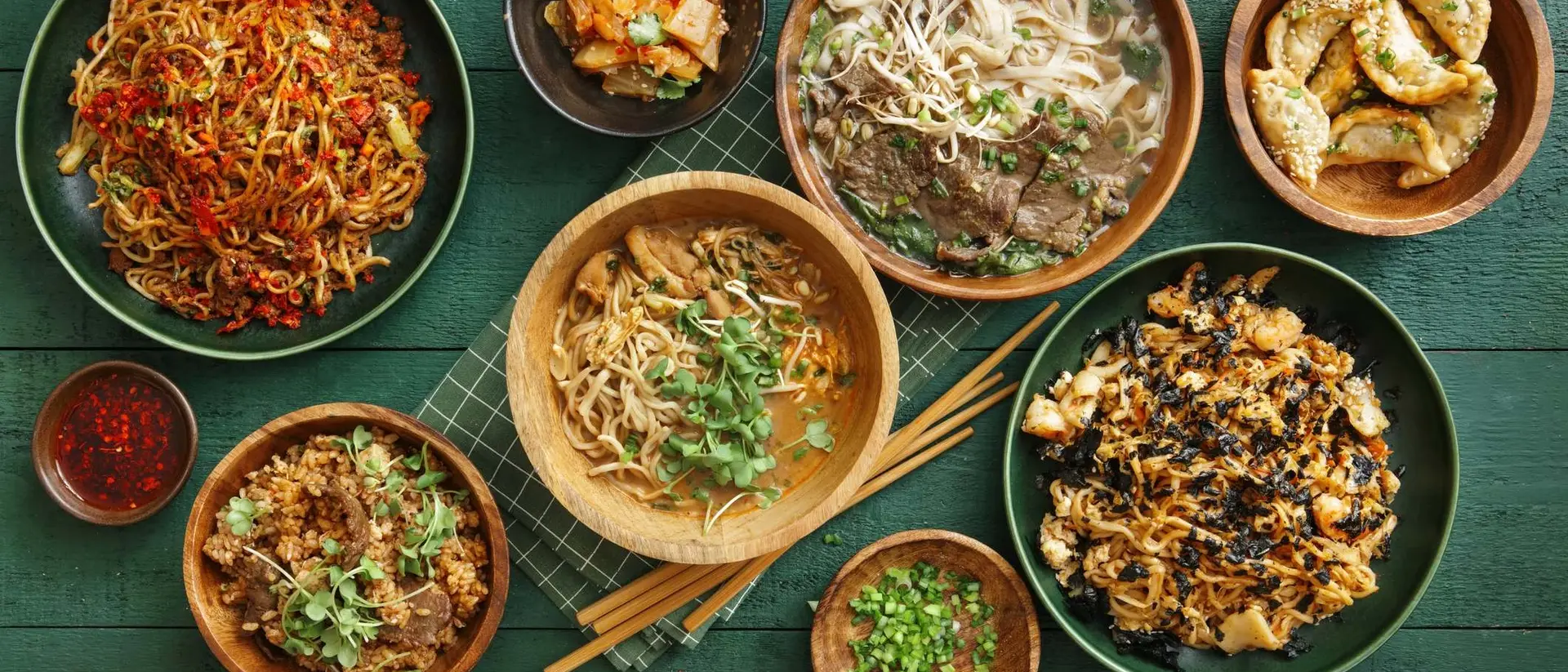





Nasi goreng (fried rice), satay with peanut sauce, rendang from Sumatra, gado-gado, babi guling in Bali, and martabak are among the most popular.
Indonesia Travel Information
Not sure which theme is right for you?
Food & Drink
Indonesia’s cuisine is a feast of history and geography, shaped by Javanese elegance, Balinese vibrancy, Sumatran spice, and centuries of Chinese, Indian, and Dutch influence. From the legendary spice islands to bustling night markets, food here tells a story of trade, community, and ritual.
“Bali has amazing restaurants and cafés, from upscale dining to small local spots,” says Destination Specialist Lydia Guo. “Merah Putih in Seminyak is a personal favourite. It’s very popular, so book ahead.”
Across Indonesia, meals are often shared, blending bold flavours with a sense of togetherness, whether it’s a village feast, a temple offering, or a beachside dinner at sunset. From one end of the nation to the other, street stalls sizzle with satay skewers, warungs serve steaming bowls of noodles, and high-end restaurants reinterpret tradition with modern flair, creating a culinary journey as diverse as the archipelago itself.
To plan your Indonesian culinary adventure, speak to one of our Destination Specialists today.
A Culinary Overview of Indonesia
Rice is the centerpiece of most Indonesian meals, whether plainly steamed, fragrant with coconut milk, or stir-fried into the beloved nasi goreng. Aromatic spices, fiery sambal, and creamy coconut curries bring depth and variety to daily dining. Each of Indonesia's islands offers distinct specialties influenced by religion, climate, and local produce.
Muslim-majority regions such as Java and Sumatra focus on halal dishes featuring beef, chicken, and seafood, while Hindu Bali celebrates pork-based classics such as babi guling. From Java’s refined soto ayam to Sumatra’s bold rendang, the flavours shift dramatically as you travel, yet the warmth of Indonesian hospitality remains constant at every table.
Unique Indonesian Dining Experiences
Indonesia’s culinary identity is woven from regional specialties that are both comforting and deeply flavourful. Nasi goreng, the national dish, appears in countless variations, often topped with a fried egg and served at any time of day.
Satay skewers, smoky from the grill and paired with rich peanut sauce, are a street food favourite from Java to Bali.
From West Sumatra comes rendang, a slow-cooked beef stew infused with coconut and spice, while gado-gado offers a fresh, vegetable-based counterpoint with its creamy peanut dressing.
In Bali, babi guling is a celebratory roast-pig dish, its crisp skin and aromatic spices marking special occasions. Tempeh and tofu, staples across the islands, are prepared in inventive ways that appeal to vegetarians and meat-eaters alike.
For a sweet or savoury indulgence, martabak pancakes are filled with anything from spiced meats to chocolate and cheese.
Dining ranges from humble warungs serving family recipes to guided street-food tours, hands-on cooking classes, and refined tasting menus that showcase the depth of Indonesian cuisine.
Indonesia’s Beverage Scene
Indonesia’s drinks are as diverse as its islands. Kopi luwak, the famous civet coffee, remains a sought-after and sometimes debated luxury, while Bali coffee is strong, unfiltered, and steeped in tradition.
Jamu, an age-old herbal tonic made with turmeric, tamarind, and ginger, is enjoyed for its health benefits.
“My favourite drink in Bali,” says Destination Specialist Lydia Guo, “is an avocado smoothie—rich, creamy, and delicious.”
On a hot afternoon, many locals reach for Teh Botol, a sweet bottled iced tea, while evenings in Bali might begin with a glass of arak, the island’s signature spirit.
Across the country, high-end bars and resort lounges serve craft cocktails and carefully selected wines, often paired with ocean views or jungle backdrops, adding a contemporary touch to the traditional drinks scene.
Indonesian Dining Etiquette
Dining in Indonesia blends warmth, hospitality, and tradition. Meals are often eaten with the right hand, or with a spoon and fork, as knives are rarely used at the table. Sharing dishes is part of the experience, reflecting the communal nature of Indonesian culture.
In rural areas, it is common for guests to be offered food, and accepting with gratitude is considered polite. In Muslim-majority regions, alcohol is often unavailable or discreetly served, and visitors should be mindful of customs during Ramadan, when many locals fast from sunrise to sunset. Observing these small courtesies shows respect for local traditions and deepens cultural connections.
To learn more about local customs around food, consult our helpful guide to Indonesia’s culture and traditions.
Accommodating Dietary Needs in Indonesia
Indonesia’s variety of ingredients makes it amenable to many dietary preferences. Vegetarian and vegan travelers will find plenty of tofu and tempeh-based dishes, while Bali and Jakarta also offer growing options for gluten-free dining.
Outside of Bali, halal food is the standard, with pork more common in Balinese and Chinese-influenced kitchens. Peanuts are widely used in sauces and snacks, so those with allergies should communicate clearly with restaurant staff. Tap water is not recommended for drinking; instead, bottled or filtered water is the safest choice.
With a little planning, travelers can enjoy Indonesia’s many flavours without compromising dietary needs. Speak to one of our Destination Specialists to craft a food-focused itinerary ideal for you.
Plan Your Indonesian Culinary Journey
Indonesia’s culinary scene offers as much variety as its landscapes, and Goway can help you savour it all.
Among the highlights: Take a street-food tour in Yogyakarta, sampling steaming bowls of bakso and freshly grilled satay. In Bali, join a cooking class to learn the art of blending aromatic spices for dishes like lawar or gado-gado.
In the town of Ubud, indulge in a wine-paired tasting menu combining local ingredients with culinary creativity. Elsewhere, visit organic coffee and spice plantations to experience the aromas and flavours of Indonesia’s agricultural heritage firsthand.
With Goway, your journey can be tailored to balance gourmet moments with authentic, everyday tastes. Let us craft your food-focused journey through Indonesia’s vibrant culinary scene.
Featured Indonesia Trip Ideas
Indonesia Travel PackagesClassic Bali: Ubud, Highlands & Sanur
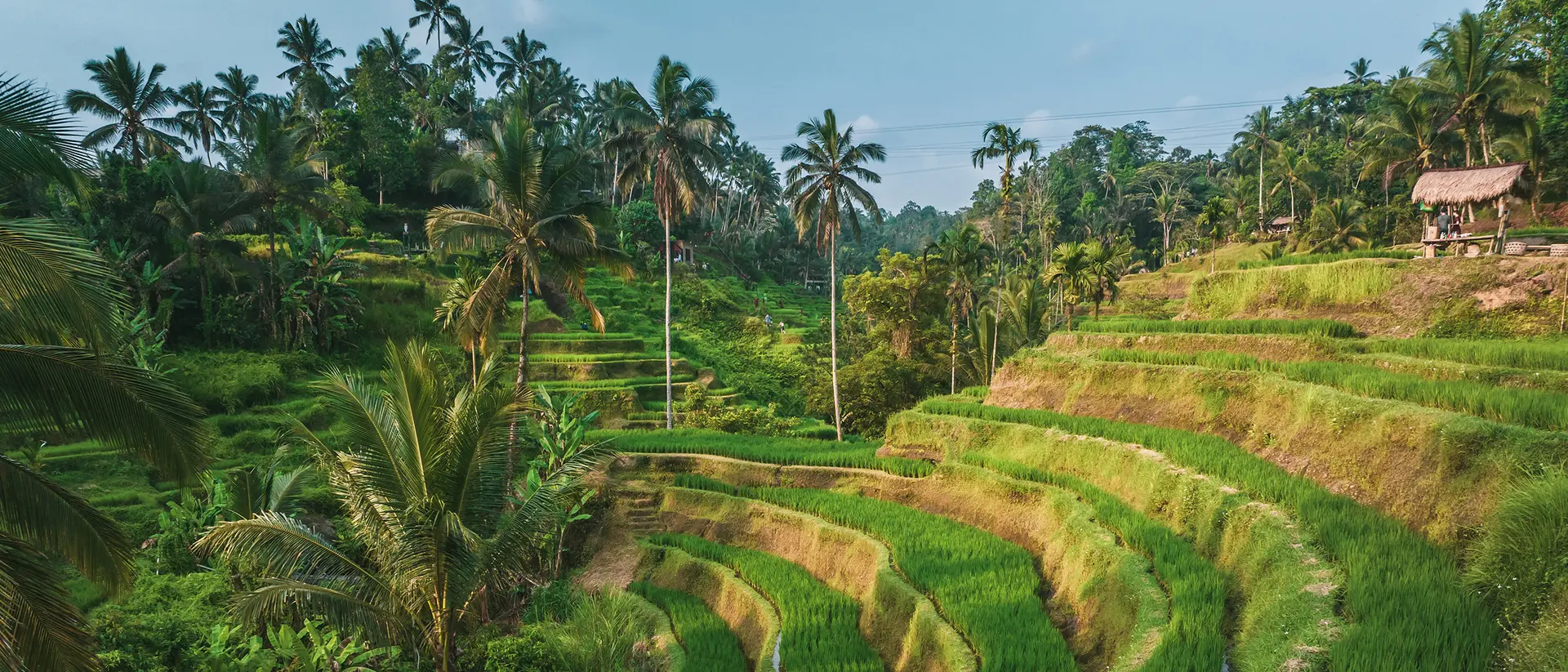
Bali, Sanur, Uluwatu Temple, and UbudDiscover Bali's scenic rice terraces, sacred temples, vibrant markets, tropical beaches and cultural traditions from Ubud to Sanur.
12 days
From US$3,274/p.p.
Request a Quote
Classic Bali: Ubud, Highlands & Sanur
Bali, Sanur, Uluwatu Temple, and UbudDiscover Bali's scenic rice terraces, sacred temples, vibrant markets, tropical beaches and cultural traditions from Ubud to Sanur.
12 days
From US$3,274/p.p.
Request a Quote
Travel Stories
Get inspired about Your Trip to Indonesia
K-Beauty at the Source: Why Your Wellness Routine Leads to South Korea
South Korea's beauty industry has almost certainly reached your home already. According to Korea's Ministry of Food and Drug Safety, the country expor...
Hitting the Streets on a Pedicab Tour of Seoul
South Korea has earned a unique spot among Asian destinations for its food, history, traditions, and, more recently, its pop culture. Over the last se...
Exploring Rugged & Beautiful Mongolia
“Hold the dogs,” shouts the local guide as we approach a nomad’s home in the Gobi Desert somewhere in the middle of Central Mongolia. It’s a Mongolian...
Frequently Asked Questions
What are the must-try Indonesian dishes?
Is Indonesian food spicy?
Many dishes use chili-based sambal, but spice levels can be adjusted. Mild options are widely available.
What is nasi goreng and why is it so popular?
It’s Indonesia’s national fried-rice dish, flavoured with soy sauce, garlic, and spices, and often topped with an egg. It’s simple, flavourful, and served everywhere.
What drinks are common in Indonesia?
Popular choices include world-class coffee, jamu herbal drinks, sweet iced tea, fresh coconut water, and arak in Bali.
Can vegetarians eat well in Indonesia?
Yes. Tofu, tempeh, and vegetable-based dishes are common, especially in Bali and larger cities.
Indonesia Travel Information
Not sure which theme is right for you?
Unlock more by subscribing to our newsletter.
With our newsletter, you’ll get access to regular communications that inspire you and help you explore the world your way.Exclusive Savings
Insider Benefits
Trending Stories

ExcellentBased on 5,289 ReviewsI had a fantastic experience working with Lisa D. on the Goway team. She was helpful, attentive and made sure we were comfortable with our bookings and itinerary before departure, and also checked in with us following our trip. Would definitely book with Goway again!Mandi S.1186952 trip reference - Croatia and Montenegro.
Dear Goway Travel Team!
I wanted to reach out and share some well-deserved praise for Jacqueline, who has assisted me closely with several of my travels. She recently curated a trip for me to Croatia, the beautiful islands, and Montenegro, and it was an absolute home run.
Jacqueline has an incredible ability to listen to her clients' needs and translate them perfectly into a flawless itinerary. Her articulation, guideline execution, and professionalism are unmatched. What sets her apart is her forward-thinking approach—she always knows the exact hotspots and trends, ensuring the pace of the trip matches my speed perfectly.
Everything transitioned seamlessly thanks to her attention to detail and care. She is a massive asset to your organization, and her consideration makes every vacation stress-free. I will absolutely continue to use her for all my future travels.
Kindest regards,
Vince Sacco Vince SaccoWe can’t thank Katherine enough for helping organize our amazing trip to Scotland! Everything came together beautifully, and we were able to enjoy so many incredible places and experiences without the stress of trying to plan it all ourselves. From the accommodations to the itinerary, everything helped make our trip so special. Scotland was absolutely beautiful, and we came home with wonderful memories that will last a lifetime. We would highly recommend Katherine to anyone planning a trip and looking for someone who truly cares about making it a great experience!
Dan & Michelle Yake MichelleAbsolutely incredible trip! From beginning to end! All accommodations were excellent. If you want to experience Safaris this trip will fulfill all your expectations! A special thanks to our driver we had for our entire trip Evans! He made our trip over the top! The Hot air balloon ride in the Masai Mara is a must…it’s breathtaking!Pam SeitzI have worked with Goway several times in the past two years and every single trip has been unforgettable. Specifically, our travel advisor, Maria, has helped us book phenomenal trips to Thailand, Spain, Portugal, Italy, Ireland, and most recently, Iceland. Maria is so wonderful and easy to talk to, but what really stands out is her ability to get to know her clients so she can plan trips that perfectly align with our interests and desires. I cannot recommend her strongly enough! Her expertise, hard-work, and dedication towards each trip has given myself, my family, and friends memories to last a lifetime! Kayla CovelloJamil made our 40th birthday trip to Portugal so so very amazing and special! Great service, fabulous hotels, and wonderful day trips! Lane StricklandKatie was great, planned everything we needed, was great with changes and trip schedule conflicts. Fantastic working with her.CTI have been booking with GoWay for more than 2 years and feel so fortunate to have the best Travel Advisor, Maria Spitman, making our vacations unforgettable. I can’t say enough about Maria… she is personable, efficient, detail-oriented, and extremely knowledgeable about her specialty destinations. We have booked many trips with her, including Thailand, Spain, Portugal, Sicily, Iceland, and our most recent trip in Greece. Maria has not only curated nuanced itineraries, but has done so combining her vast knowledge of each region with our interests and needs being met perfectly. With that, it is evident that Maria learns about her clients to create vacation packages that far exceed expectations. I won’t book with anyone else! GoWay has a gem that is irreplaceable! I highly recommend seeking Maria out for all your destination needs. DarleenGoway has been amazing to work with. Farooq was my agent through Goway and she communicated promptly, planned a great international trip for my clients and was always organized. The trip was flawless to Rome and Malta from beginning to end!Kim KameleskyLisa Dachuk was incredible on organizing my trip. She took the time to know what I wanted and created an experience I will forever be grateful for having.Louise Helie Masters
Verified
Verified
Verified
Verified
Verified
Verified
Verified
Verified
Verified
Verified