On this page
- Birdwatching Travel Is Here to Stay
- Birdwatching from Costa Rica to Saudi Arabia
- Birding Safaris Across Kenya & Tanzania
- Birding in the Rich Ecosystem of Ecuador’s Cloud Forests
- Uganda’s Kazinga Channel: One of Africa’s Great Birding Destinations
- The Evergreen Appeal of Birdwatching from Central America to New Zealand
- Birdwatching FAQ


People travel to far-flung destinations for all kinds of reasons: the food, the culture, the landscapes, the thrill of adventure. Increasingly, I’m drawn for the birds. And clearly, I’m not the only one.
Birdwatching Travel Is Here to Stay
Once the pandemic hit, birdwatching (or birding, to the initiated) exploded in popularity. During the pandemic, the online database eBird reported a more than 40% increase in sightings in April 2020 and the birding app Merlin saw bird IDs rising 175% year over year. Rather than fading afterward, participation continued to grow, with millions of new users joining these Cornell Lab of Ornithology platforms in subsequent years. Birding has become an important sub-sector of the wildlife tourism industry. According to Spherical Insights, birding tourism is set to double in market value, reaching $107 billion by 2033. It helps that birding tourism aligns with many trends within the travel industry.
For one, it’s sustainable, as it fosters environmental protection and observing wildlife from a safe and secure distance. Birders watch, but they don’t interact, which is essential to preserve the natural environments. It also naturally forces you to slow down the pace, which plays into slow travel, the notion that you should shrink the number of destinations on a single itinerary and spend more time exploring each one at a more leisurely pace. When you’re birding, you’re forced to slow down, or else you might not spot the animal. You also can’t fit birdwatching tours into a hectic itinerary, so you need to add extra days to really see the birds you want to.
It’s all led to a newfound popularity for birding, which dovetails with a passion for nature travel. To inspire people to seek out transformative wildlife experiences and to celebrate the beauty of birds, I chatted with a few birding enthusiasts within Goway to share some of the best birding experiences worldwide.
Birdwatching from Costa Rica to Saudi Arabia
My own passion for birding developed during the pandemic when spotting raptors outside my apartment window was some of the only excitement available to me in those dreary days of 2020. Soon enough, spying the bright crown of songbirds or tracing the looping flights of raptors high in the sky became a joy in itself, not just a means of distraction in a tough period of our collective lives.
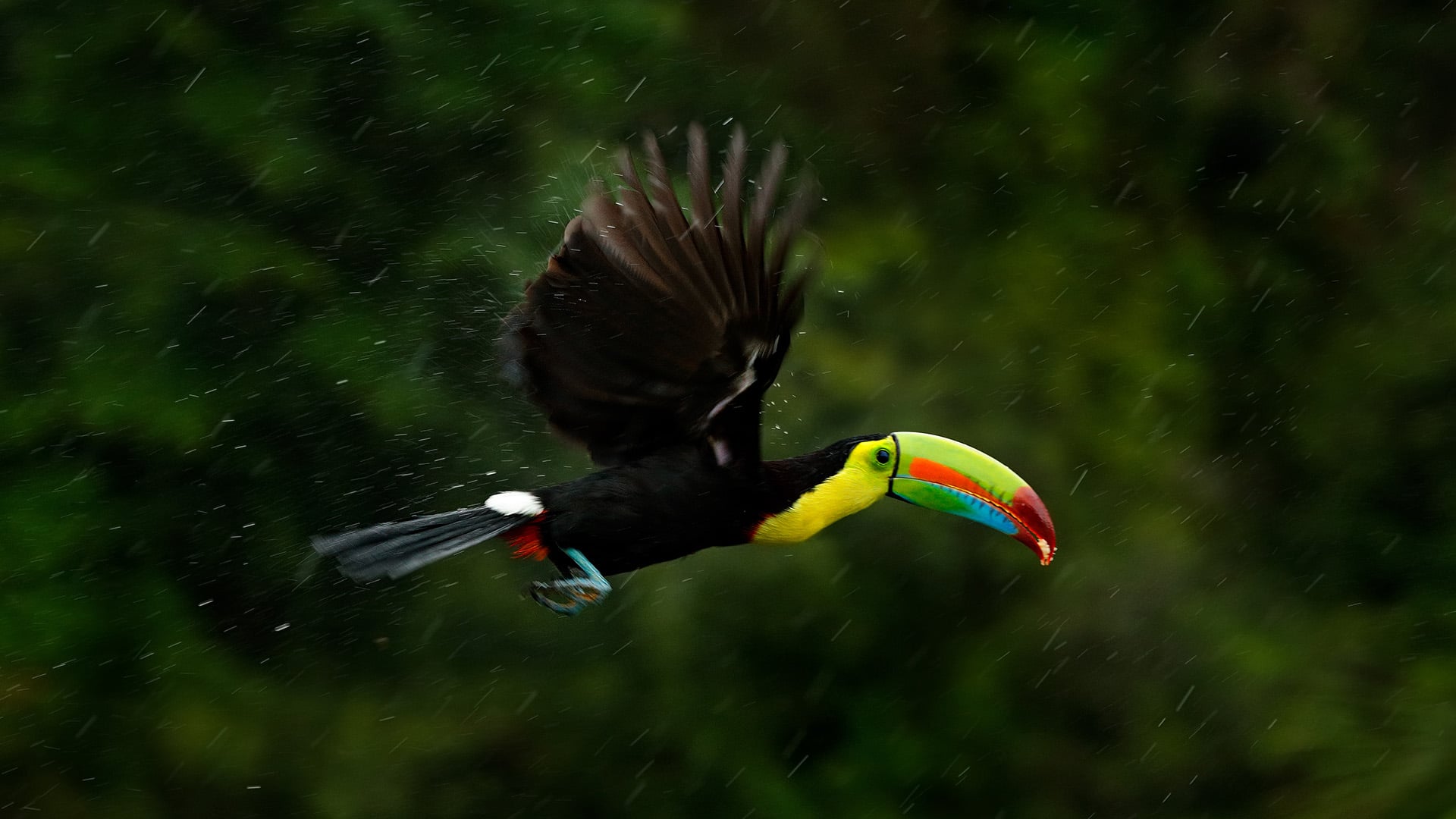
Once I started travelling internationally again, spotting exotic birds became a key part of the joy of travel. In Costa Rica, I remember an early morning birding tour along the backroads near Manuel Antonio. Costa Rica is one of the world’s most biodiverse nations and home to a dense bird population supported by north and south migration routes. That morning, we watched as a keel-billed toucan patiently stalked the nest of two mated scarlet macaws, waiting for the chance to swoop in and feast on their eggs. The toucan was beautiful, but framed against the majesty of the macaws, who were protective of their young, the beauty of the toucan became almost dreadful—like a dastardly villain from an old movie. Later, as we passed a small marshland, I remember our guide remarking ecstatically as he spotted a purple gallinule, a rail-like bird with long yellow legs, a bright red beak, and brilliant blend of indigo and aquamarine feathers. Who would have thought spotting a squat marsh bird could bring such excitement and joy?
My excitement for birds only grew on subsequent trips. In Paris, my wife and I spotted some of the hundreds of parakeets that live wild in the city’s parks such as the Bois de Boulogne. Stuck in the city during a heat wave, the birds flying overhead washed over us like a cool tropical breeze. In Saudi Arabia, I remember baffling my travel companions as I heard the call of bee-eaters in an oasis in AlUla and wandered off to see them lighting on a nearby branch. The small burst of yellow and green against the red of the desert is still burned in my brain several years later. Later during that trip, in Riyadh, a tour of an opulent, marbled hotel foyer climaxed with the sheikh who owned the hotel showcasing a gorgeous saker falcon—falconry is extremely popular in the Arab Gulf states. While others marvelled at the opulence of the hotel worth several hundreds of millions, I was dazzled by the brilliance of the raptor.
Birding Safaris Across Kenya & Tanzania
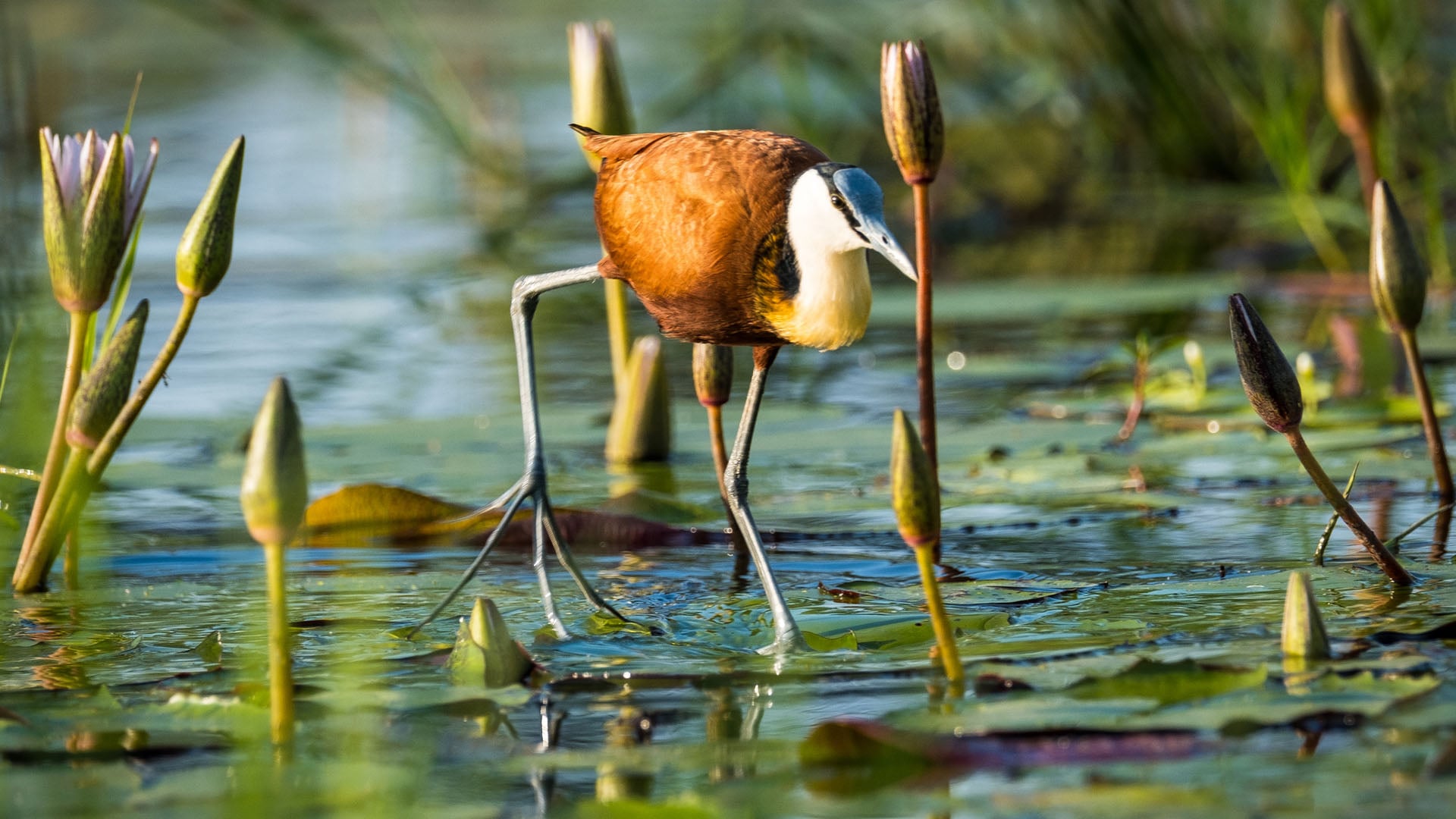
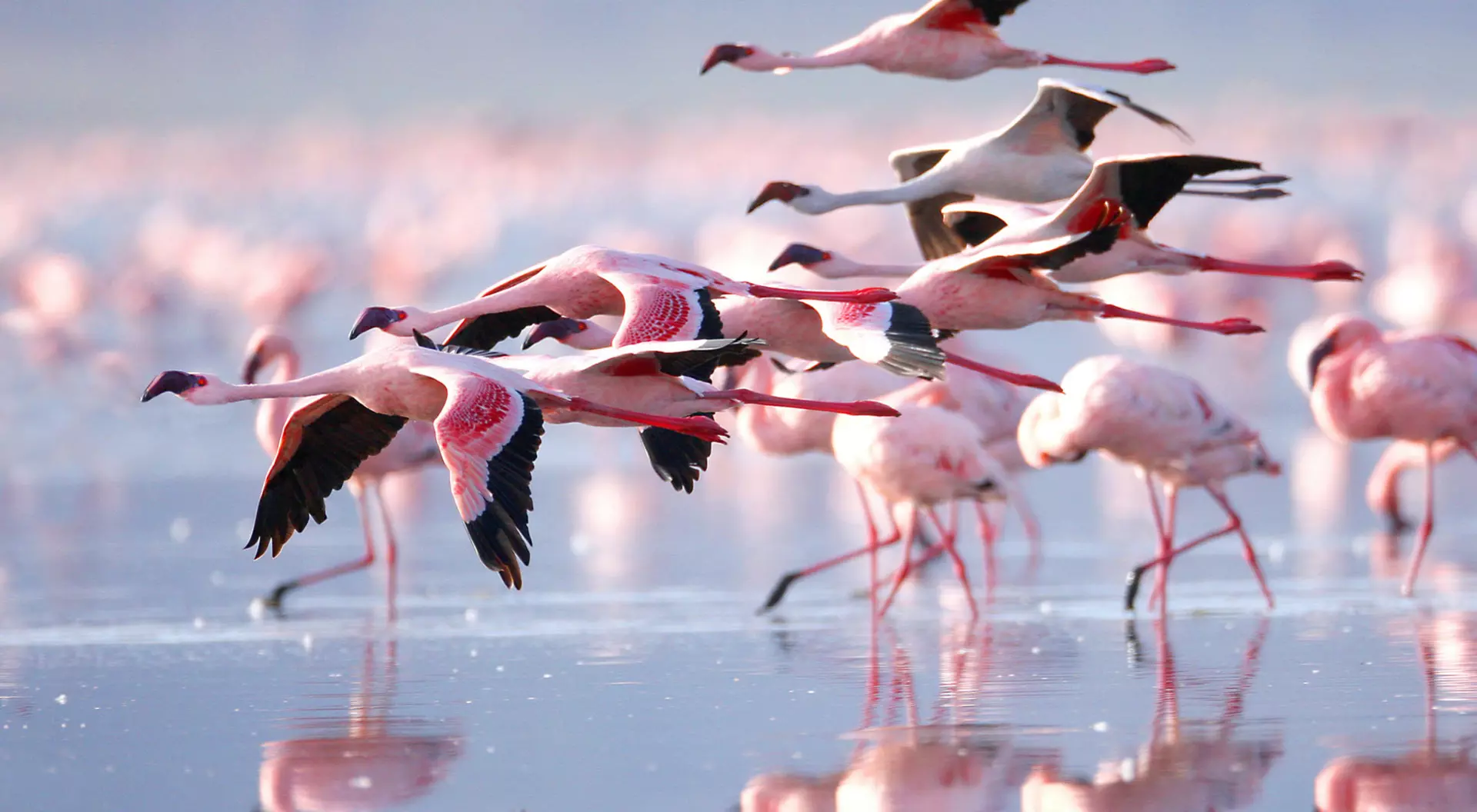
Once I finally reached East Africa, every day brought a new birding wonder. In Masai Mara National Reserve in Kenya, I got up-close views of ostriches on the savannah. I remember spotting an ostrich running at the sight of a hot air balloon landing in the early morning, its long neck flailing back and forth like an elastic Looney Tunes character. In the Ndutu region of the southern Serengeti in Tanzania, I saw secretary birds stalking the shrubland in search of snakes and other prey to stomp on with their long legs. Later, as we crossed from Ndutu to the central Serengeti, we spotted kori bustard, the world’s heaviest flying bird, walking through the grass. The males hilariously puff up their neck feathers and parade through the grassland in hopes of impressing and attracting a mate; to us human onlookers, they looked like Elizabethan jesters with their frilly necks. As we crossed into the Ngorongoro Crater, I remember getting my first view of flamingos covering a small soda lake, the pink of their feathers—a result of their carotenoid-rich diet of pink shrimp, fly larvae, and algae—especially brilliant against the deep blue of the water. But the most memorable experience was spotting the African jacana.
I first learned about the jacana thanks to a television nature documentary, SuperNatural, which had amazing footage of these long-legged marsh birds which are able to walk on lily pads across ponds due to their light weight and extremely long, dexterous toes. Even more impressive was their dedication to their young. Like penguins, the jacana is one of nature’s most attentive fathers, as the male parent will often raise the young, even tucking them under their wings for protection as they walk through dangerous environments. I knew that jacana lived in Tanzania, but I didn’t think we had a chance of seeing them until we passed a swamp in the crater’s north and I saw some activity among the lily pads. I went silent and my wife noticed that I had become fixated on something nearby. “Is it a jacana?” she asked, knowing that I had said seeing one of these birds walk on the water in the wild was a bucket list item. I was breathless in my confirmation: “Yes, it’s a jacana.”
These sorts of birding experiences are burned into my memory and as memorable as visits to great landmarks such as the Colosseum or Machu Picchu. They are tangible proof of the power of travel to showcase the wonder of the world and help us delight in the beauty of nature in all its colourful glory.
Birding in the Rich Ecosystem of Ecuador’s Cloud Forests
Channa Jayasinghe, Destination Specialist
I’m a seasoned birder, having travelled across the world to spot thousands of birds in their natural habitats, but likely my favourite birding experience was recently in Ecuador, exploring Mindo and the Andes mountains. Ecuador has over 1,600 bird species and nearly 15 percent of the world’s bird species, all within a landmass smaller than the state of Nevada. During this unforgettable journey I spotted 350 bird species. I had planned the trip for over a year, focusing on regions and birding lodges that aligned with my passion for nature and wildlife. I even learned some Spanish, knowing that the language would deepen my connection with the people and their landscapes.
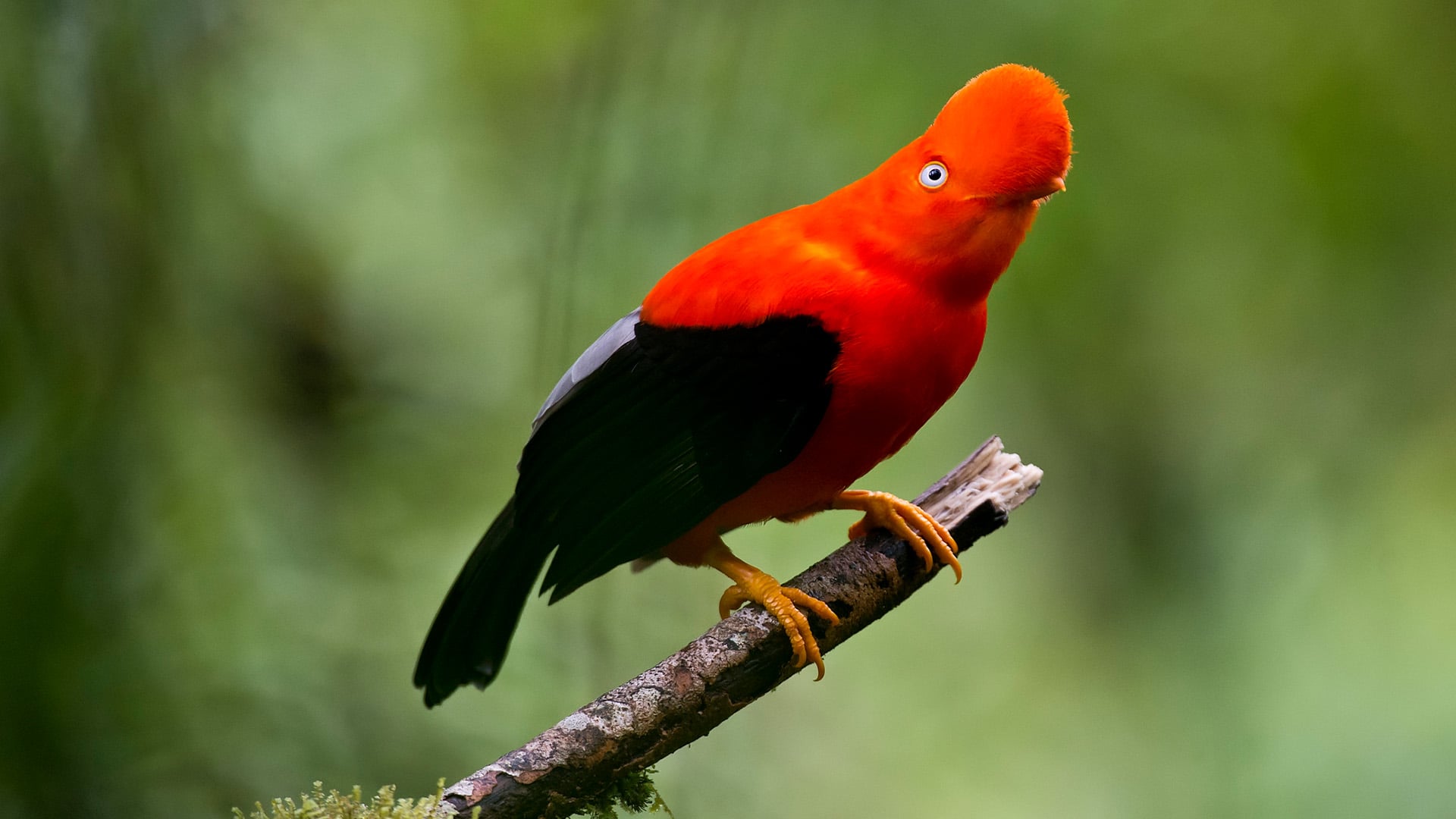
We started in the capital Quito and travelled into the cloud forests on the western slopes of the Andes. This is one of the most biodiverse ecosystems on Earth, home to orchids, hummingbirds, tanagers, umbrella birds, Andean cock-of-the-rock, and elusive spectacled bears. We stayed at Refugio Paz de las Aves, Mashpi Amagusa Lodge, and Bellavista Cloud Forest Reserve, spending our days birdwatching, hiking, and exploring canopy walks—you can experience both Mashpi Lodge and Bellevista Cloud Forest Reserve with Goway.
We continued east towards the Amazon Basin and descended gradually with stops at Guango Lodge, San Isidro Lodge, and Wild Sumaco Lodge, experiencing birdlife across changing elevations before reaching Coca. From there, canoe transfers brought us to Sani Lodge in Yasuní National Park, where we enjoyed wildlife excursions, jungle walks, parrot clay licks, cultural exchanges with the Kichwa community, and optional shamanic experiences. The sheer wonder of what I witnessed is hard to describe, but for birders, it’s hard to top the volume and beauty of what’s on display in Ecuador.
Uganda’s Kazinga Channel: One of Africa’s Great Birding Destinations
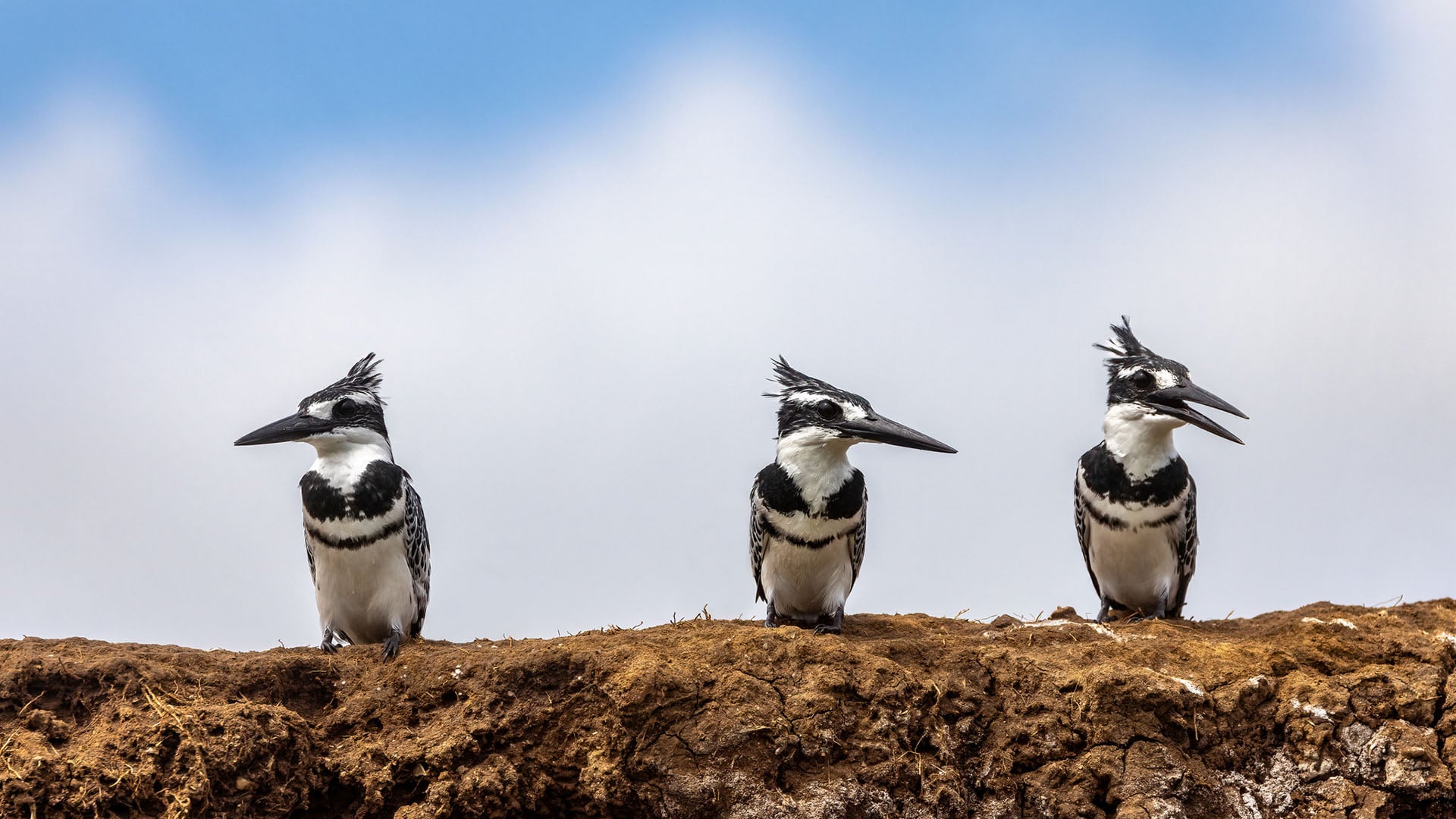
Moira Smith, VP Asia
Both my favourite birding experience and my top recommendation for anyone who loves birds happens to be one and the same: a boat cruise along the Kazinga Channel in Queen Elizabeth National Park in Uganda. Uganda is widely considered one of Africa’s top birding destinations, with over 1,000 recorded species within its borders. The sheer volume and variety of birds on the Kazinga Channel is something that genuinely has to be seen to be believed—and this is coming from someone who travels a lot. It’s one of those experiences where an iPhone photo just doesn't cut it—you really need to be there to experience the wonder.
African skimmers flitter along the water's surface with almost impossible precision, goliath herons stand like sentinels in the shallows, pied and giant kingfishers dart and hover, pink-backed pelicans glide in lazy formation, yellow-billed storks wade with elegant purpose, and the wonderfully ugly Marabou stork presides over it all with that peculiar, prehistoric dignity. It's also home to the African fish eagle, which is my favourite bird in all the world. Their cry is so elemental, so deeply woven into the soul of the continent. More than any other sound I know, it is the sound of Africa. You hear it and something stirs in you that you can't quite explain. If you have any love of birds at all, put the Kazinga Channel on your bucket list.
The Evergreen Appeal of Birdwatching from Central America to New Zealand
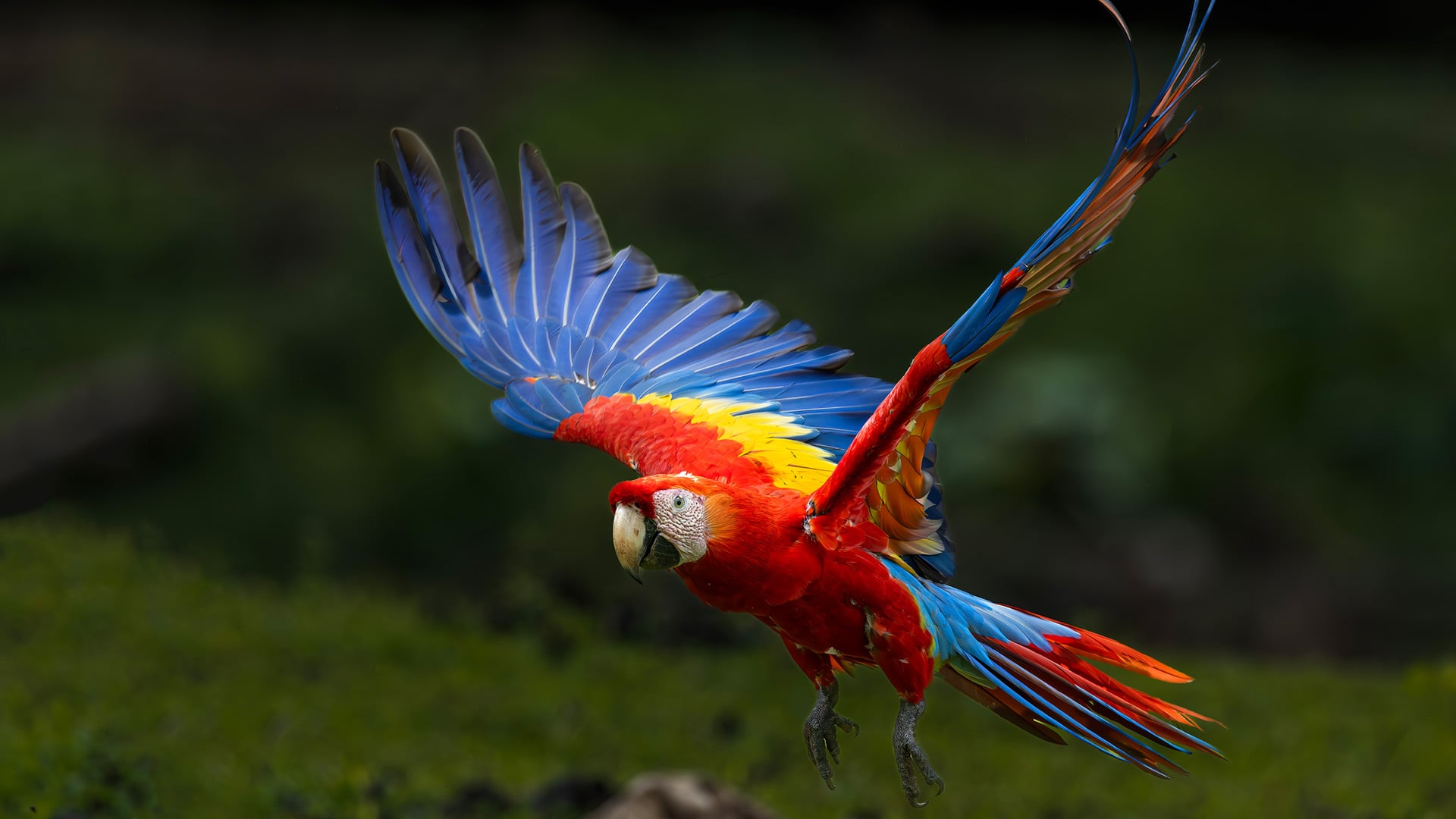
Meg Smith, Sales Performance Manager
I've had many cool bird sightings over the years, but if I had to choose just one favourite, it would have to be seeing a group of scarlet macaws in an area of Tortuguero National Park in Costa Rica, where they allegedly hadn't been seen in over 50 years due to habitat loss. The collective noun for macaws is "a pandemonium," and it very accurately described the scene when eight of these massive parrots all showed up at once. I was with our guide and two other travellers, one of whom refers to herself as a "bird nerd," so needless to say she was especially excited. For her, this was such an unlikely sighting. She told me, "They weren't even on my list because I thought there was just no way we’d see them." Before that day I wasn't really that into birds, but after the thrill of that sighting, amongst so many other amazing ones that day, I officially and happily joined the "bird nerd" crew for life.
You’ll find so much natural wonder in any Central American rainforest, whether in Costa Rica, Nicaragua, Honduras, or Mexico. As well, you cannot go wrong with most game reserves across southern and eastern Africa. Perhaps because I just returned from there, New Zealand is also on my mind. I wasn’t expecting it to be high on the list of birding meccas, but there are many unique endemic birds there—and not only the adorable kiwi. There are so many beautiful places to explore, from the Galapagos Islands to Australia, to experience the biodiversity of our planet and the power of spotting gorgeous birds in the wild.
Birdwatching FAQ
What is the best country in the world for birdwatching?
No one country can lay the claim to being the best birdwatching nation in the world. However, Costa Rica is a contender for top billing, with astounding biodiversity and over 900 species in an accessible landmass. Other Latin American destinations including Colombia, Ecuador, and Brazil are also exceptional, since they benefit from dense bird populations and exist along bird migration routes.
When is the best time of year for birding travel?
It’s best to travel during peak migration season, so it will always vary depending on the country you wish to visit. In general, the spring and fall is best for North America, the dry fall is best in East Africa, and the dry winter months are ideal in Central America.
Do you need a guide for birdwatching trips?
No, you don’t need a guide. Guides, whether traditional print guidebooks such as the Audubon guide, and apps like Merlin help you identify birds in the wild. However, hiring an expert guide will help you find rare species, especially since every local bird population has its own unique habits.
Is birding travel sustainable?
Yes, birding travel is sustainable, as it’s about observing bird species, but not interacting with them. Birdwatching travel encourages conservation and can help support local communities with park fees and jobs.
Goway’s Destination Specialists design custom wildlife itineraries with local naturalist guides that help you get closer to birds and other of the world’s rarest species. Discover the world’s beautiful birds on a tailor-made vacation. Get a free quote today.

You might say that Aren was destined to become a globetrotter after his family took him to Germany two times before he was four. If that wasn’t enough, a term spent in Sweden as a young teenager and a trek across Vietnam, Cambodia, and Thailand confirmed that destiny. An independent writer, director, and film critic, Aren has travelled across Africa, Asia, Central America, Europe, the Middle East, and South America. His favourite travel experience was visiting the major cities of Japan’s largest island, Honshu, but his love for food, drink, and film will take him anywhere that boasts great art and culture.