After breakfast, drive up to Dochu-la Pass (3,088m / 10,130 ft), where you can pause to admire the view and appreciate the chorten, mani wall, and prayer flags that adorn the highest point on the road. On a clear day, you can see several peaks from here, including (from left to right) Masagang (7,158m), Tsendagang (6,960m), Terigang (7,060m), Jejegangphugang (7,158m), Kangphugang (7,170m), Zongphugang (7,060m), and finally Gangkar Puensum, Bhutan's highest peak at 7,570m, dominating the remote Lunana region.
At Dochula Pass, you will find 108 chortens, or stupas, known as Druk Wangyal Chortens, built by Ashi Dorji Wangmo Wangchuk, the eldest Queen Mother. These chortens are arranged in three layers: the first layer has 45, the second has 36, and the top layer has 27, all built around the central chorten.
After taking in the natural beauty at Dochula Pass, continue your drive toward Punakha.
Punakha, once the capital of Bhutan and the seat of government until 1955, remains the winter residence of the Je Khenpo (chief abbot). Known for its temperate climate and fertile valley, fed by the Pho Chhu (male) and Mo Chhu (female) rivers, Punakha produces abundant crops and fruits. Situated at 1,300m above sea level, it enjoys mild winters and is a popular destination year-round.
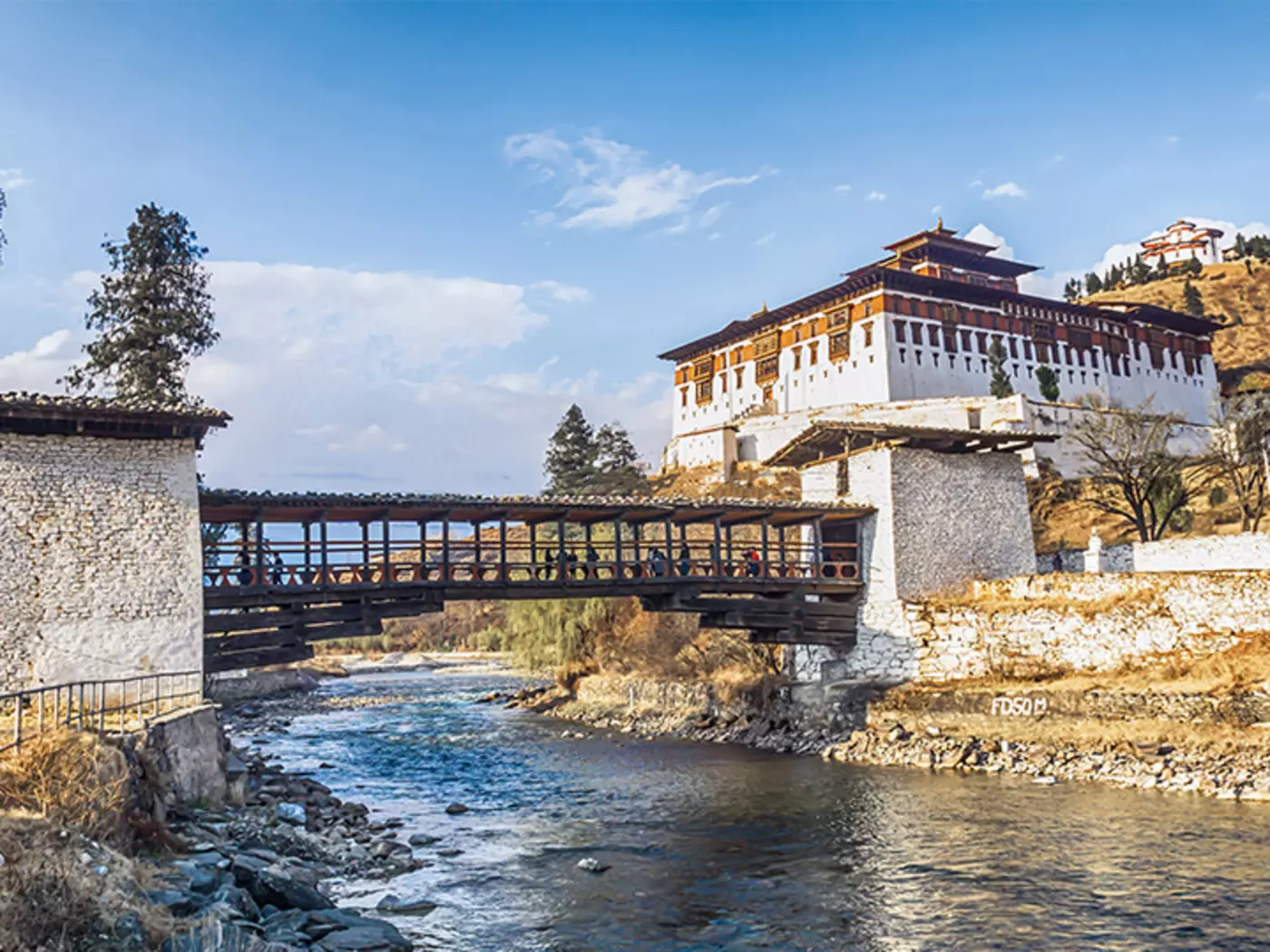
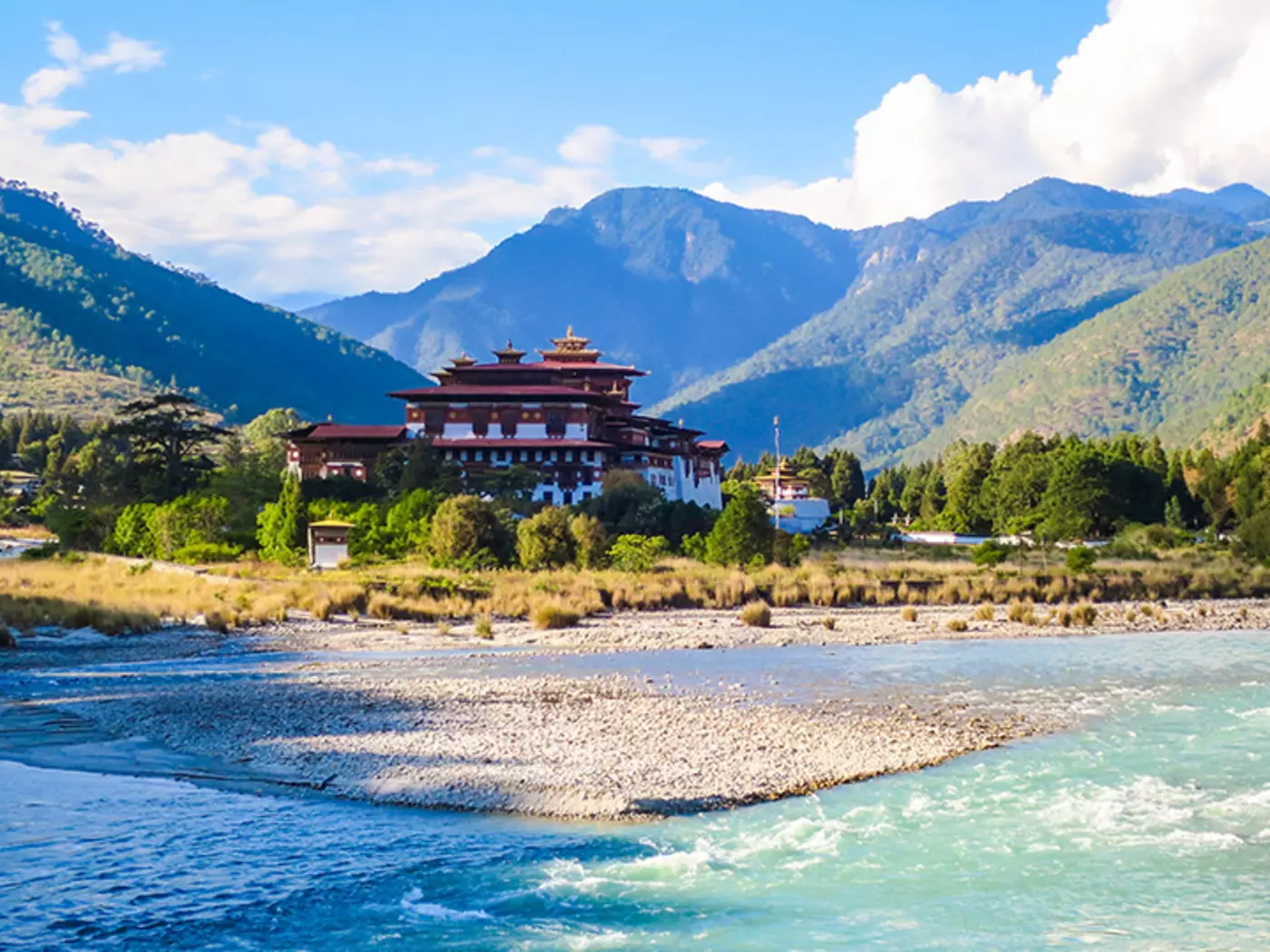
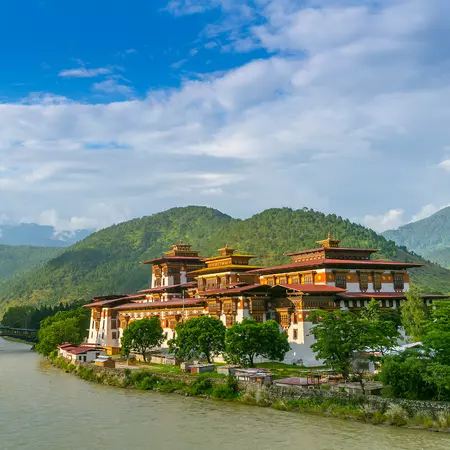
After lunch, visit Punakha Dzong, or the Palace of Great Happiness, built at the confluence of the Pho Chhu and Mo Chhu rivers in 1637 by Shabdrung Ngawang Namgyal. This magnificent dzong was both the religious and administrative center of Bhutan. Measuring 600 by 240 feet, it features a six-story tower with a gold dome, along with courtyards and religious statues that reflect Bhutan's deep spiritual heritage. Your guide will provide fascinating insights into the history and traditions of this iconic structure.
Next, take a short excursion to Chimi Lhakhang, known as the temple of fertility, located on a hillock in the heart of the valley. It is believed that couples seeking children who pray here are often blessed with a child. The trail leads through rice fields to the village of Pana, meaning "field," and a stroll through this charming village offers a rare glimpse into the everyday life of the locals.
Conclude your day with a leisurely walk around the heart of Punakha town.